







Discover high-quality auditorium chairs, theater seats, and hall chairs designed for comfort and durability in auditoriums, theaters, conference halls, and lecture rooms.
The Comfort Revolution of Airport Seats: From "Hard Board First Class" to Smart Waiting Experience
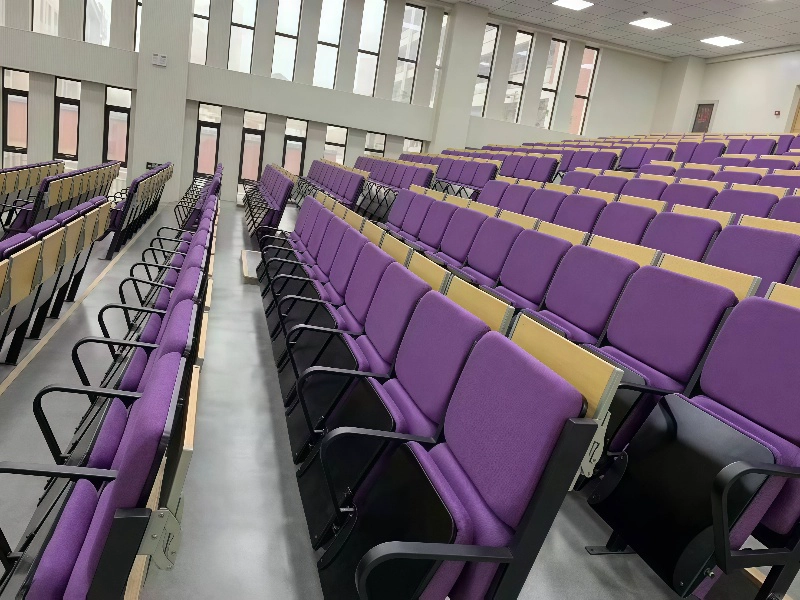
In the context of the rapid development of the global aviation industry, airport seats have evolved from simple rest tools to a key facility for enhancing passenger experience. From the controversy over massage chairs at Taiyuan Airport to the successful case of "Hard Board First Class" at Wuxi Shuofang Airport, the design and functionality of airport seats are undergoing a silent revolution. With technological advancements and the continuous improvement of passenger needs, airport seats are moving towards greater comfort, intelligence, and environmental friendliness, creating a more humanized waiting environment for passengers.
1. Comfort Design: From Ergonomics to Sensory Experience
The comfort of airport seats directly affects the passenger's waiting experience. According to the latest research, the angle of the backrest, the inclination of the seat cushion, and the supporting structure of the seat have a decisive impact on the fatigue and comfort of passengers.
2. Intelligent Innovation: Charging Interfaces to Pressure Sensors
In recent years, the intelligence level of airport seats has been continuously improving, from simple charging interfaces to complex sensor systems, providing passengers with a more convenient waiting experience.
Charging interfaces have become a standard feature of modern airport seats. Before the Asian Games, Wenzhou Airport optimized the waiting environment by replacing some seats in the terminal building and installing a batch of new charging handrails, allowing passengers to charge their electronic devices conveniently on comfortable seats. According to data, Capital Airport installed over 3,800 sets of charging panels with two sets of USB-A interfaces and USB-C interfaces in the terminal building, with a total of more than 15,000 charging interfaces per row of seats, achieving "one charging station per row" coverage.
More advanced airport seats have begun to integrate intelligent technologies such as pressure sensors. The intelligent airport seat developed by Innovation Future Furniture Company has pressure sensors installed under the seat surface, which can real-time count the usage of the seat and help the airport back office understand which area's seats are more popular, thereby optimizing the passenger diversion strategy. In addition, these sensors can also monitor the passenger's sitting posture and provide personalized suggestions, such as reminding passengers to adjust their posture to avoid prolonged sitting discomfort.
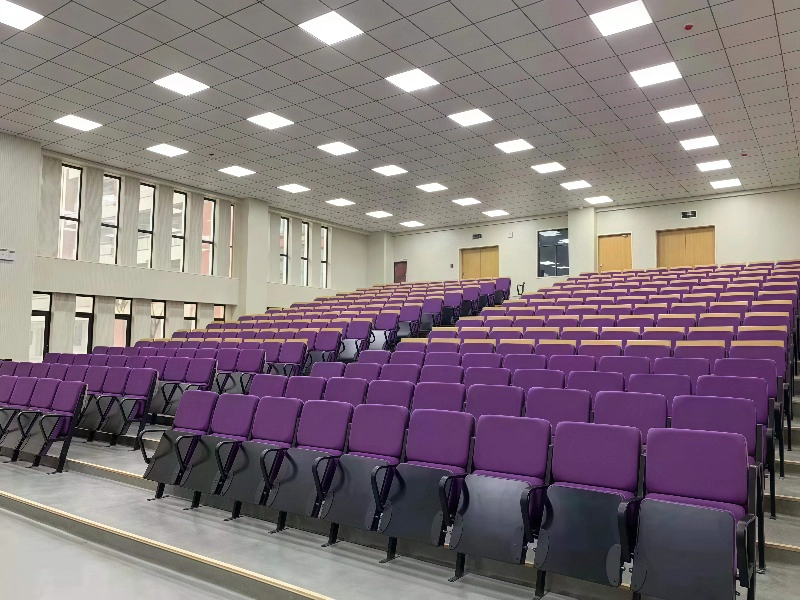
"The reliability of pressure sensors is an important indicator for assessing quality. It can comprehensively reflect the performance of pressure sensors, and the reliability level directly affects work efficiency, economic benefits, and even personal safety issues."
3. Environmental and Sustainable: From Materials to Energy Transformation
Environmental and sustainable development has become an important consideration in modern airport seat design. According to the list of "Beautiful China - Green Space Users" typical cases in 2025, the "Compost Project of Kitchen Waste and Green Waste in Low Cost, High Participation, and Easy Promotion" by Airport Group successfully entered the list, providing a replicable grassroots solution for the green transformation of transportation hubs through innovative practices.
In terms of material selection, more and more airport seat manufacturers are adopting environmentally friendly technologies. Shengshi Huayi Furniture Company focuses on "balance between appearance level and practicality", using "water-based paint technology", which contains no heavy metals and has extremely low volatile substances, resulting in a seat with almost no smell, meeting the requirements of airports for a "green environment". The Italian A Design Award-winning work "Restpoint Airport Chair" uses stainless steel and chrome as the main body, with a PU soft seat, ensuring durability while embodying the environmental concept.
4. Future Development Trends: Lightweight, Multi-functional, and Personalized
Looking ahead, the development of airport seats will present three major trends: lightweight, multi-functional, and personalized.
The application of lightweight materials will significantly reduce the operating costs of airports. The seats developed by JiaTai Company for the domestic large aircraft C919 have adopted carbon fiber composite materials, with a single weight reduced to 7.2 kilograms. Compared to traditional seats, this represents an 8% reduction in weight, and it can save nearly 200,000 yuan in fuel costs annually. Although these technologies are currently mainly applied to cabin seats, their design concepts are extending to seats in the waiting area.
Multifunctionality will become the standard feature of airport seats. A multi-functional airport seat that integrates emergency systems and intelligent control has been launched. This seat not only has basic rest functions but also is equipped with PDP (plasma display), LED display equipment, emergency rescue devices, temperature control devices, charging facilities, and seat adjustment devices, which can meet the diverse needs of passengers.
Personalized services will also become an important development direction for future airport seats. "Based on passengers' health data, through algorithm analysis, potential health problems can be predicted in advance," said experts. In the future, airport seats may be equipped with sensors to monitor passengers' sitting postures, pressure distribution, etc., and remind passengers to adjust their positions to prevent discomfort. At the same time, the layout of the seats will also be more flexible. For example, the "elastic matrix" layout adopted by Yinchuan Airport reduces the distance to 1.1 meters during the morning rush hour to cope with large passenger flows, and relaxes to 1.4 meters in the afternoon to create a relaxed atmosphere.
V. Conclusion: Comfortable Seats Create Quality Travel Experiences
Airport seats, as important facilities for passengers during their waiting period, their design and functions directly affect the passengers' travel experience. From the controversy over the massage chairs at Taiyuan Airport to the successful case of the "hard first-class cabin" at Wuxi Shuangfang Airport, we can see that only by integrating comfort, functionality, and aesthetics can we truly enhance the passengers' waiting experience.
With technological progress and the continuous improvement of passengers' needs, airport seats are developing towards more comfortable, smarter, and more environmentally friendly directions. From charging ports to pressure sensors, from ergonomics to green materials, each innovation of airport seats is creating a more humanized waiting environment for passengers.
The optimization of airport seats not only enhances passengers' comfort but also transforms the passive waiting process into an active enjoyment experience. In future airport construction, comfortable, intelligent, and environmentally friendly airport seats will become an important part in shaping a quality travel experience, adding more happiness to every passenger's journey.
By continuously paying attention to passengers' needs and continuously optimizing the design and functions of airport seats, we believe that airport seats will become the bridge connecting passengers and the airport, making every waiting time a "little happiness" on the journey.