






EU Enforces New Accessibility Regulations for Auditorium Seats, Mandating Inclusive Design Standards
In a landmark move to promote inclusivity in public spaces, the European Union (EU) has enforced new accessibility regulations for public buildings, including auditoriums, requiring all newly built and renovated venues to install auditorium seats that meet strict inclusive design standards. The regulations, which came into effect in September 2023, aim to ensure that people with disabilities, the elderly, and other vulnerable groups have equal access to cultural, educational, and professional events held in auditoriums. This new legislation has had a profound impact on the European auditorium seats industry, forcing manufacturers to adjust their designs and production processes to comply with the new requirements.

The new EU regulations specify that sports stadiums, theaters, conference centers, and educational auditoriums must allocate at least 2% of their total seating capacity to accessible auditorium seats, which must be evenly distributed throughout the venue to ensure that people with disabilities have a clear view of the stage or lecture area. These accessible seats must be designed to accommodate wheelchairs, with extra space for attendants, and must be equipped with features such as adjustable armrests, easy-to-reach controls, and Braille labels. In addition, the regulations require that the path to the accessible auditorium seats must be barrier-free, with ramps and elevators provided to ensure easy access.
France, which has long been a leader in accessibility legislation, has already implemented stricter measures than the EU’s minimum requirements. According to French law, municipalities with a population of more than 5,000 must establish a disability accessibility committee to evaluate the accessibility of public buildings, including auditoriums. French auditoriums are now required to install accessible auditorium seats with wider seats, reinforced armrests, and integrated wheelchair securement systems, ensuring that people with disabilities can enjoy the same experience as other attendees. For example, the Stade de France in Paris has recently renovated its accessible seating areas, installing more than 500 new accessible auditorium seats that meet both EU and French standards.
European auditorium seats manufacturers have responded quickly to the new regulations, developing a range of inclusive products that meet the accessibility standards. Ferco Seating Systems, for instance, has launched a new line of accessible auditorium seats that features a modular design, allowing venue operators to easily adjust the number and location of accessible seats according to their needs. The seats are equipped with wheelchair securement systems, adjustable armrests, and Braille labels, and are made of durable, easy-to-clean materials. Another leading manufacturer, Audience Systems, has developed accessible auditorium seats with integrated assistive technologies, such as hearing loop systems and visual alerts, to meet the needs of people with hearing and visual impairments.
The new regulations have also had a significant impact on venue operators, who are now required to ensure that their existing auditorium seats are upgraded to meet the new accessibility standards. Many theaters and educational institutions across Europe are investing in renovations to replace outdated seating with accessible auditorium seats, ensuring compliance with the law and improving the overall experience for all attendees. For example, the Royal Albert Hall in London has recently completed a renovation project that included the installation of new accessible auditorium seats, making the venue more inclusive for people with disabilities.
Industry analysts note that the new EU accessibility regulations are not only a legal requirement but also a reflection of the growing emphasis on inclusivity in the European society. By ensuring that auditorium seats are accessible to all attendees, venues can attract a wider audience and promote social inclusion. In addition, the regulations are driving innovation in the auditorium seats industry, with manufacturers developing new technologies and designs to meet the diverse needs of attendees. As more countries adopt similar accessibility standards, the demand for inclusive auditorium seats is expected to grow globally.
While the new regulations present challenges for manufacturers and venue operators, they also offer opportunities for growth. Manufacturers that prioritize inclusive design are likely to gain a competitive edge in the market, as venue operators increasingly seek to comply with the regulations and improve the accessibility of their facilities. The EU’s focus on inclusivity is also expected to drive demand for accessible auditorium seats in other regions, as countries around the world look to adopt similar standards.
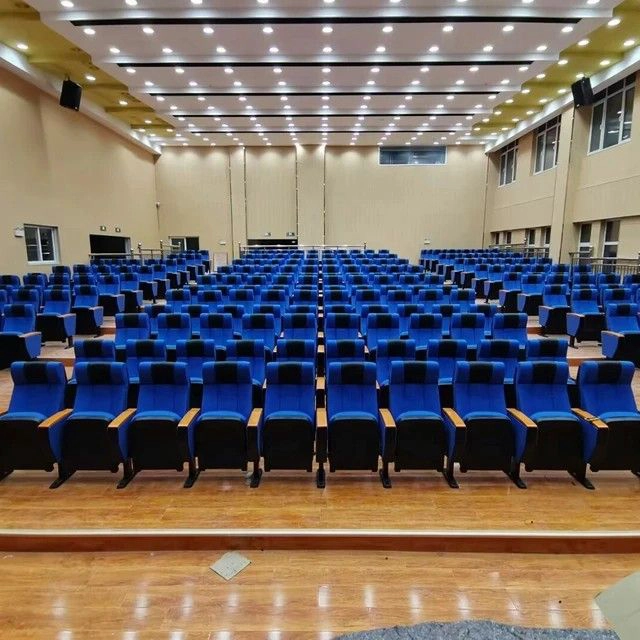
Looking ahead, the European auditorium seats industry will continue to adapt to the new accessibility regulations, with a focus on developing innovative, inclusive, and high-quality seating solutions. As the industry evolves, auditorium seats will become more accessible, comfortable, and functional, ensuring that everyone has the opportunity to enjoy cultural, educational, and professional events in public spaces.