







From "Rain and Wood Symbiosis" to the "Bamboo Fiber Revolution": The Green Awakening of a School Desk and Chair
**[In-depth Report]** In the classrooms of Zhangcheng Primary School in Zhangcheng Township, Longde County, Guyuan City, Ningxia, 220 brand-new desks and chairs gleam with a warm sheen. These seemingly ordinary desks and chairs have a remarkable origin—they are masterpieces "reborn" from empty skincare bottles and wooden caps donated by consumers thousands of kilometers away, after professional recycling. This "Rain and Wood Symbiosis" public welfare campaign, initiated by the Guyu brand, not only gives new life to waste but also transforms environmental education from a slogan into a tangible reality for children.
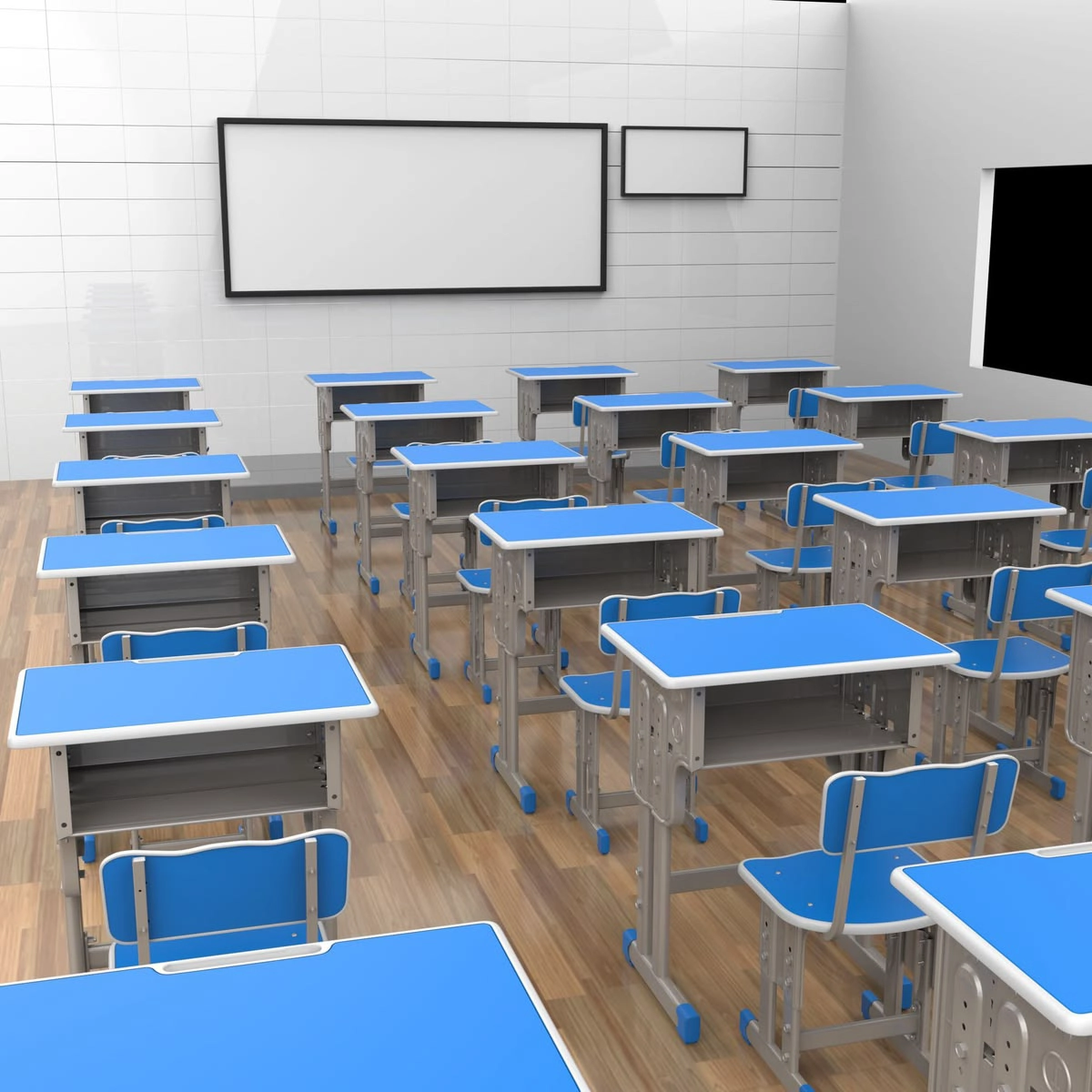
This is not an isolated case. Driven by both the "dual carbon" goals and new national standards, the educational equipment industry is undergoing a profound "material revolution." Traditional formaldehyde-exceeding boards and non-degradable plastics are being rapidly phased out, replaced by new environmentally friendly materials such as bamboo fiber, recycled plastics, and straw boards. According to the "2025-2030 Sustainable Development Report of the Educational Equipment Industry," the overall proportion of recyclable materials used in educational equipment is expected to exceed 60% by 2030. When the creation of a school desk and chair no longer means exploiting forests but rather recycling waste, we see the possibility of harmonious coexistence between education and nature.
The "Hardcore" Comeback of Bamboo Fiber: How Can Natural Materials Balance Performance and Environmental Protection?
In a classroom at an elementary school in Zhejiang, bamboo fiber desks and chairs made from three-year-old moso bamboo are undergoing rigorous testing. Whether from frequent writing friction by students or accidental impacts from heavy objects, the desktops remain intact. This material, known as "natural steel," removes the sugars and insect eggs from bamboo through a high-temperature carbonization process, not only solving the problem of susceptibility to insect infestation but also boasting a load-bearing capacity of up to 200 kilograms, far exceeding national standards.
The environmental advantages of bamboo are equally remarkable. As a renewable resource with an extremely short growth cycle, bamboo requires no pesticides or fertilizers, and the annual carbon sequestration per hectare of bamboo forest is 1.5 times that of cedar. Using this material to make school desks and chairs means that every set of products reduces the burden on the planet. Even more remarkably, bamboo fiber furniture is biodegradable after disposal, avoiding the "white pollution" problem caused by traditional wood-based panels. When children sit in these desks and chairs with a hardness of 110HB and almost zero formaldehyde emissions, they are not only learning knowledge but also experiencing the gifts and power of nature.
The "Glamorous Transformation" of Recycled Plastics: From Ocean Pollution to School Landscape
In a green school on the coast of Fujian, students' chairs are made from recycled fishing nets and ocean plastics. This project, called the "Ocean Plastic Recycling Project," processes salvaged plastic waste through dozens of processes, including washing, crushing, and reshaping, into high-performance engineering plastic sheets. The creation of each chair means the removal of hundreds of plastic bottles from the ocean.
This recycled plastic not only possesses comparable strength and aesthetics to virgin plastic, but also surpasses it in environmental friendliness. Third-party testing data shows that, for the same specifications, PP recyclable plastic desks and chairs reduce carbon emissions by 35% compared to traditional ABS plastic models. For schools, choosing this material is not only a response to green procurement policies, but also a vivid lesson in environmental practice for students. When children sit in comfortable chairs transformed from "oceanic waste," they will deeply understand that waste is simply a resource in the wrong place, and everyone can be a force for change.
A Green Commitment Throughout the Entire Lifecycle: A Cradle-to-Cradle Closed Loop
On the procurement list of a key university in Beijing, a modularly designed recycled wood storage cabinet stands out. This product not only uses recycled wood as its main material, but its standardized interfaces and detachable component design make maintenance and upgrades effortless. When a component is damaged, there is no need to replace the entire unit; only the corresponding module needs to be replaced, extending the average lifespan of the equipment by 35%.
This "cradle-to-cradle" design concept is becoming a new industry consensus. Leading school furniture companies are building a closed-loop ecosystem encompassing product design, production, use, and end-of-life recycling. For example, a brand in Hunan launched a "Green Classroom Program," promising to recycle old desks and chairs for material regeneration, melting down discarded metal frames to create teaching aid supports, and crushing wood particleboard for manufacturing environmentally friendly stationery. This extreme control over the entire lifecycle cost not only reduces school procurement expenditures but also makes every set of school desks and chairs a practitioner of the circular economy.
A Guide to Avoiding Pseudo-Environmental Pitfalls: How to Identify Genuine Green Desks and Chairs?
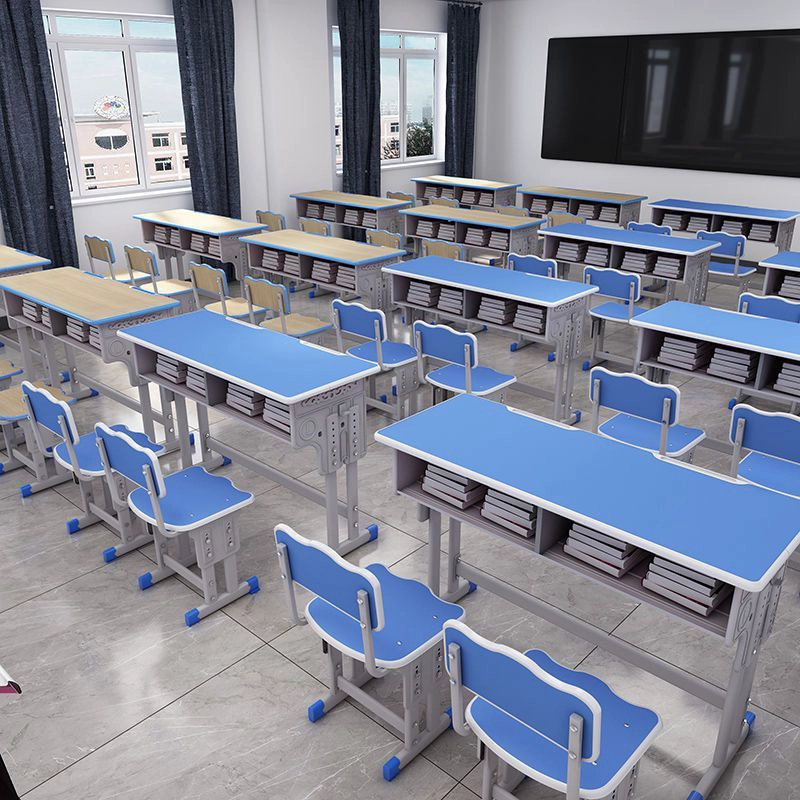
Amidst the environmental protection trend, some "pseudo-environmental" traps have emerged in the market. For example, veneer furniture is used to imitate solid wood, or "E0-grade" certification labels are forged. Even worse, some materials are touted as "environmentally friendly" but neglect ergonomic design, leading to poor student posture. Experts remind schools to be discerning when purchasing: truly environmentally friendly school desks and chairs must simultaneously meet three standards: material safety, reasonable structure, and high durability.
Checking certification labels is the first step; for example, FSC (Forest Stewardship Council) certification and GREENGUARD certification are internationally recognized environmental marks. Secondly, smelling the furniture is a simple and effective method; qualified environmentally friendly desks and chairs should have no pungent odor. Finally, request the supplier to provide a formaldehyde test report from an authoritative institution to ensure that all indicators are far superior to national standards. Only when environmental protection and health are given equal importance can school desks and chairs truly become a solid barrier protecting the healthy growth of students.