





Smart Empowerment: When Training Chairs Become Sensing Terminals for Learning Data
The reach of IoT technology has extended to every corner of educational equipment. Training chairs are evolving from cold, impersonal objects into intelligent terminals with sensing and feedback capabilities. In the smart classroom ecosystem, they play a crucial role as data collection and interaction gateways, providing a new path to achieving "personalized instruction" and "precision management."
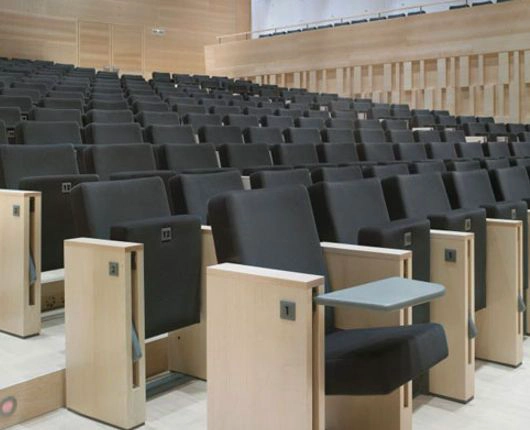
Built-in sensors are the "sensors" of the smart training chair. Through pressure sensing, it can monitor seat occupancy in real time and upload the data to the backend management system. Training organizers can easily grasp attendance rates, student attendance time distribution, and even analyze classroom participation at different times through a visual interface. This data provides objective and quantitative evidence for optimizing course scheduling and evaluating training effectiveness, enabling training management to move from "experience-driven" to "data-driven."
Furthermore, the potential of smart training chairs lies in the imperceptible monitoring of learning status. Cutting-edge research shows that through biosensor technology, chairs can imperceptibly monitor students' physiological indicators such as heart rate and respiratory rate. By integrating AI algorithms, the system can analyze learners' focus levels and fatigue levels. When it detects that a learner is in a prolonged state of low focus or high fatigue, the system can automatically send rest reminders or suggest that the instructor adjust the teaching pace and content, thus achieving personalized learning intervention.
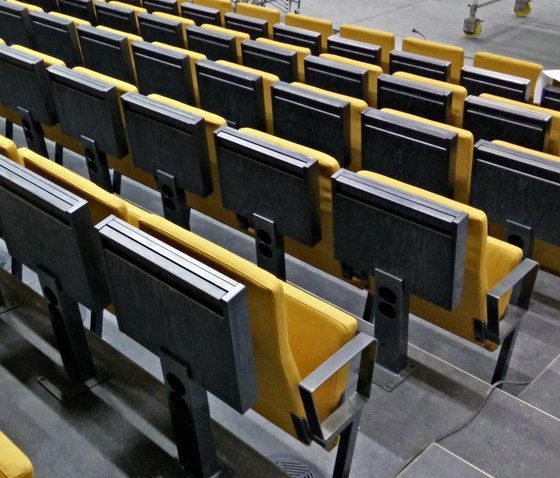
Particularly noteworthy is that this concept of intelligent interconnection is profoundly reshaping the functional boundaries of training chairs. Future training chairs will not only provide physical support but will also seamlessly integrate with online learning platforms and enterprise learning management systems. For example, after a learner sits down, the system can automatically recognize their identity and synchronize their learning progress and personalized settings, such as backrest angle and writing pad height. It will become an intelligent hub connecting people with knowledge and services, making the training experience smoother and more efficient. When a chair can "understand" the needs of learners, learning truly enters a new dimension.