Why Competitive Gaming Venues Are Reinventing the Stadium Chair
For decades, the stadium chair was designed for a body at rest: a spectator who sits, watches, and occasionally stands to cheer. Then esports arrived, and a generation of fans who spend six hours in an arena screaming at a screen demanded furniture that could keep up. The result is a radical reinvention of the stadium chair, and it is nothing like what you find at a football ground.
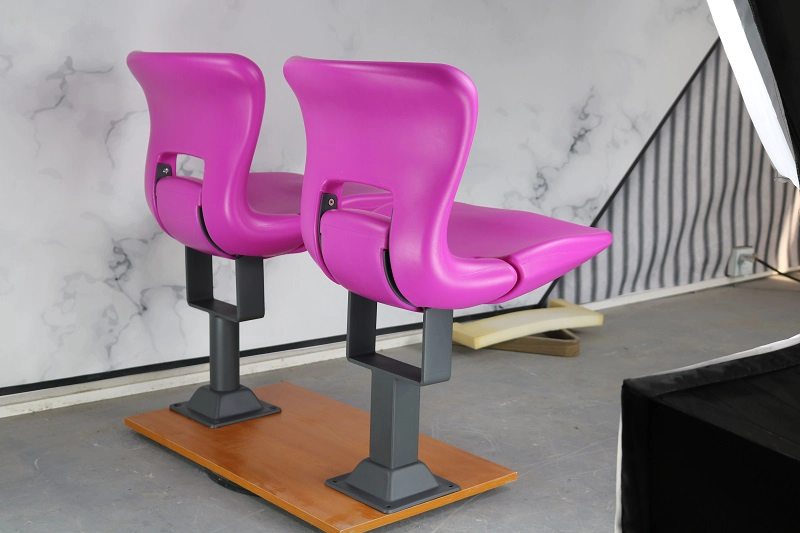
Competitive gaming venues have exploded in scale over the past five years, with dedicated arenas in Seoul, Los Angeles, Berlin, and Riyadh now seating tens of thousands of fans for tournaments that run across entire weekends. These are not converted basketball courts with folding chairs dragged in; they are purpose-built cathedrals of digital competition, and the seating has become a critical part of the experience design. Traditional stadium seating fails in this environment for several reasons. Esports fans are dramatically more active: they stand for extended periods, lean forward intensely during clutch moments, and move constantly between matches. They also carry more gear — backpacks, drink cups, banners, and occasionally full cosplay costumes — and they expect connectivity and power at every seat. The esports stadium chair that has emerged from this pressure is a hybrid creature: part task chair, part lounge seat, and part charging station, engineered to support a fundamentally new kind of spectator behavior.
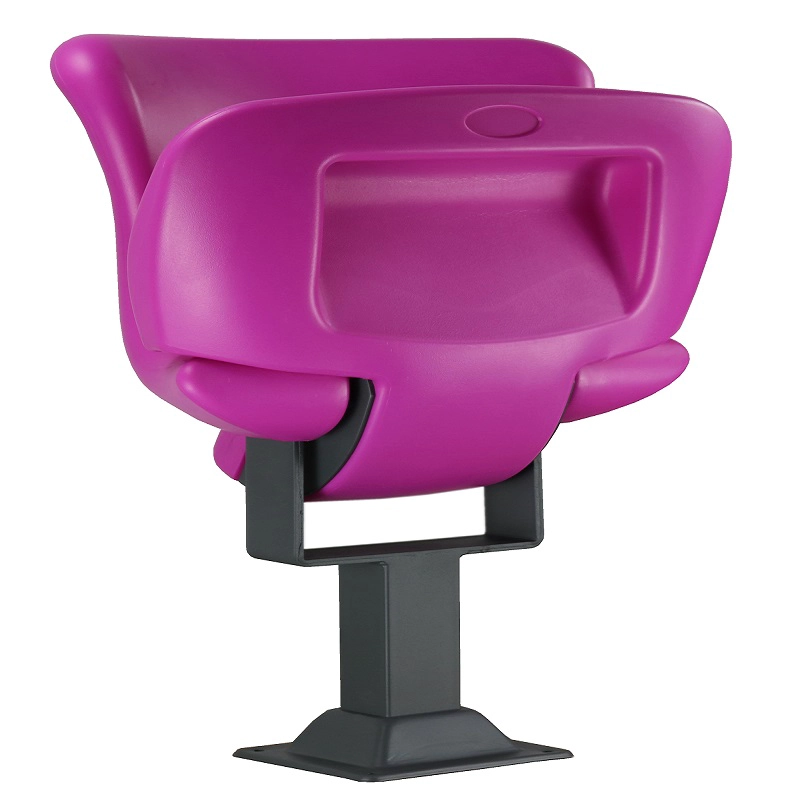
The most striking innovation is the "active perch" geometry. Rather than a deep, reclined bucket, the leading esports stadium chair features a slightly forward-tilted seat pan with a high, firm lumbar bolster, encouraging an alert, upright posture that mirrors what a player would adopt at a gaming desk. The backrest is shorter than a cinema seat but taller than a bleacher chair, ending just below the shoulder blades to allow unrestricted arm movement for fans who want to gesture, pump their fists, or hold up a phone for a stream. Many models include a fold-away footrest that tucks beneath the seat, letting fans elevate their legs during the long pauses between matches without blocking the aisle. The seat pan itself is ventilated with an open-mesh suspension system, a direct response to the fact that esports arenas run hot — thousands of bodies, enormous LED walls, and intense emotional energy combine to push ambient temperatures well above what a traditional padded seat can handle comfortably.
Connectivity is where the esports stadium chair departs most radically from its outdoor sports cousin. Every seat in a modern gaming arena is expected to offer at least one high-output USB-C port, and premium models integrate a fold-out tablet arm with a wireless charging pad. The most advanced installations embed an NFC reader in the armrest that links to the fan's tournament app, pushing live match statistics, bracket updates, and player camera feeds directly to their device without requiring them to fight for bandwidth on a congested public network. This transforms the stadium chair from a passive viewing platform into an interactive second screen, a design philosophy that mirrors the dual-monitor setups the players themselves use on stage. The chair is no longer competing with the fan's phone; it is collaborating with it, routing the fan's attention through an officially curated data stream that the tournament organizer controls.
Durability specifications for the esports stadium chair are surprisingly demanding. Tournament weekends can run twelve hours a day for three consecutive days, and the seating must survive the equivalent of a full sports season in a single event. Spills are constant — energy drinks, coffee, and the occasional celebratory shower of soda. The upholstery on the best models is a solution-dyed, bleach-cleanable performance fabric rated for 100,000 double rubs, with welded seams that prevent liquid from wicking into the foam core. The frame is typically a reinforced steel or aluminum alloy with a powder-coated finish that resists scuffing from the constant shuffle of backpacks and equipment cases. And because esports venues often double as concert halls and expo centers, the seating is increasingly specified as modular, allowing entire sections of the stadium chair fleet to be reconfigured or removed for a stage build.
The economic logic driving all of this is the same logic that drives everything in esports: engagement time. A fan who is comfortable for six hours is a fan who buys four rounds of food and beverage, three pieces of merchandise, and a ticket to the next event. A fan whose back aches after ninety minutes is a fan who leaves at the semifinal. Arena operators have found that upgrading to purpose-built esports stadium chair systems measurably extends dwell time, and dwell time is the single most reliable predictor of per-capita revenue. In a market where sponsorship deals are valued in the tens of millions and broadcast rights are skyrocketing, the seat beneath the fan has become a strategic asset rather than a line item to be minimized. The stadium chair has finally been redesigned for the audience that sits in it — and that audience, it turns out, is nothing like the one the furniture industry imagined.