





The VR-Integrated School Desk: A Portal to Immersive Learning Without a Headset
Strapping thirty headsets onto sweaty teenagers is a logistical, hygienic, and pedagogical nightmare. A new school desk and chair system embeds a holographic display directly into the work surface, projecting 3D interactive models that students can manipulate with their hands — no goggles required.
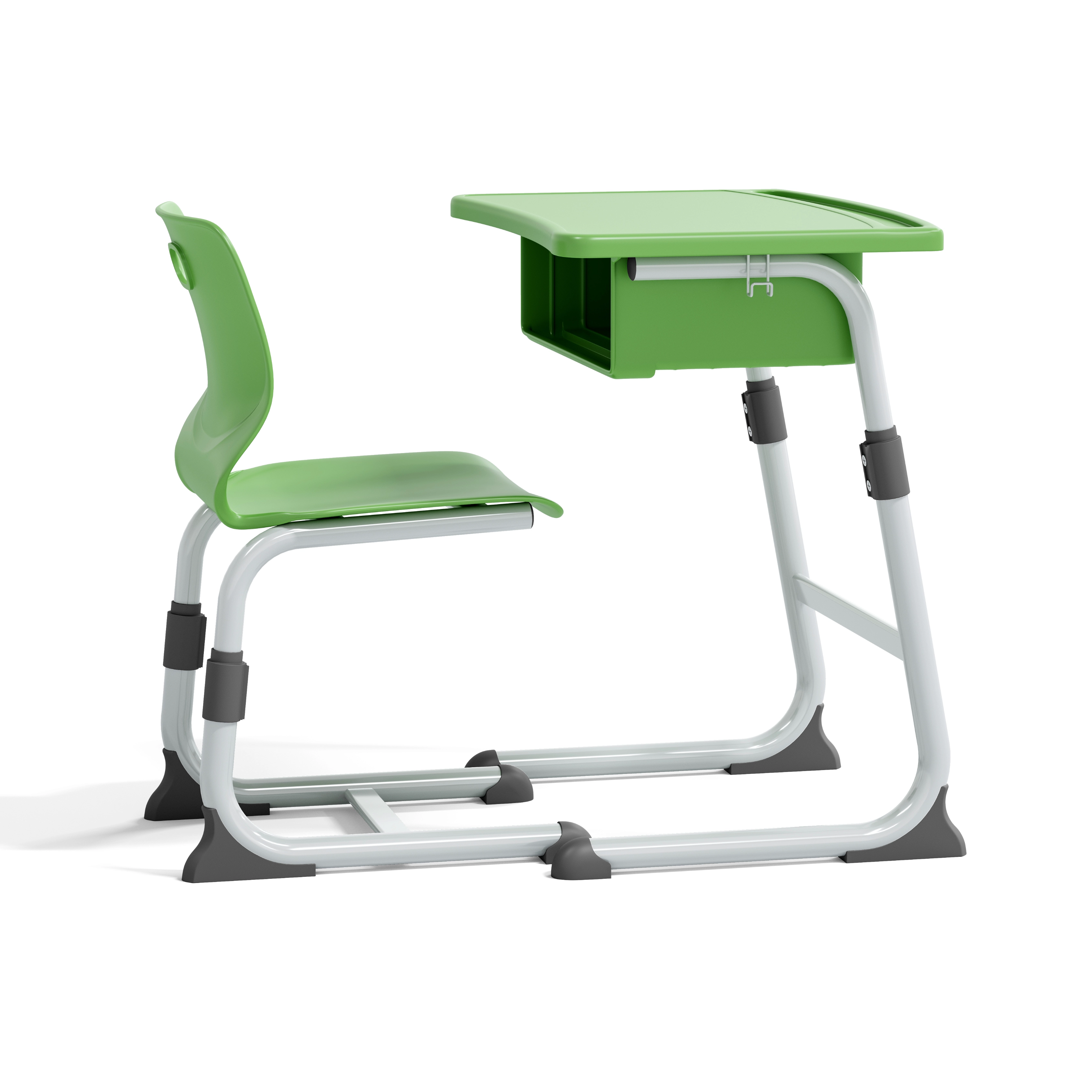
Virtual and augmented reality promise to revolutionize education, turning abstract concepts like molecular structures or ancient Roman aqueducts into tangible experiences. But the hardware has been a barrier: expensive headsets get broken, lost, or simply become uncomfortable after ten minutes. A Californian deep-tech firm has taken a different path, integrating the display technology directly into the school desk and chair. The "HoloDesk" is a deceptively normal-looking height-adjustable desk, but its matte white surface is a directional light-field display. When activated, it projects a glasses-free 3D hologram that appears to float in the air above the desk. Two students seated at this shared school desk and chair can view the same object — a beating heart, a rotating gear system, a topographical map — from their respective angles, and interact with it using gesture sensors embedded in the desk rim. The image is sharp, bright, and visible even under classroom lighting.
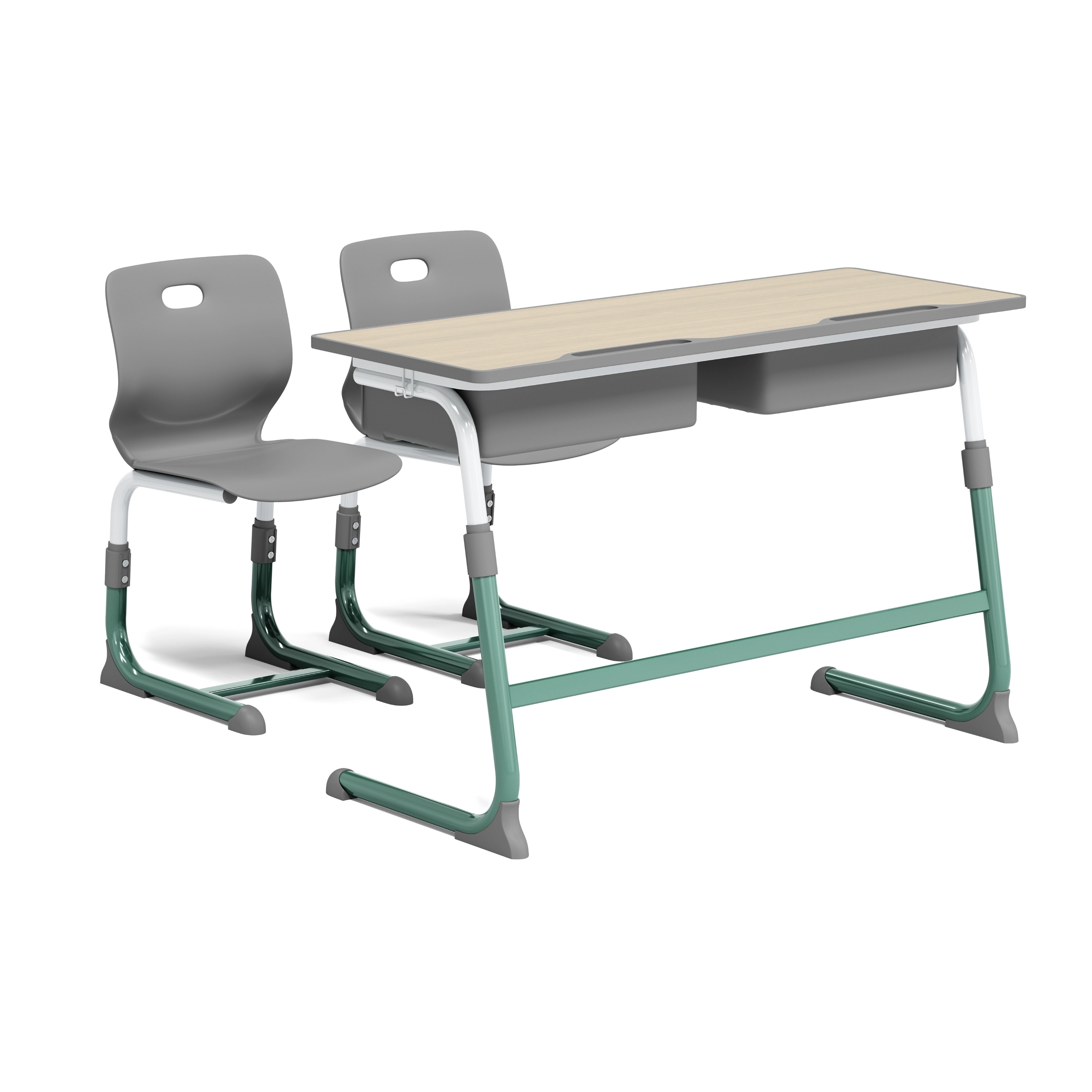
The educational design is built around collaborative dyads. The dual-sided school desk and chair configuration encourages two students to explore the holographic content together, discussing and manipulating the model with natural hand movements. The display is linked to the teacher’s master tablet, which can push differentiated content to each desk cluster; advanced learners might receive a dissectable frog with labelled organs, while struggling students receive a guided voice-over explaining each step. The desk surface also functions as a standard writing surface when the holographic projector is off, ensuring that the school desk and chair remains fully functional for traditional pen-and-paper work. The projector and processing unit are sealed in a rugged, tamper-proof housing beneath the desk, with a lifespan rated for five years of constant school use.
The cost, predictably, is the conversation-stopper: a single HoloDesk school desk and chair unit currently costs as much as a high-end laptop cart. However, grant funding from national science foundations and tech industry partnerships is subsidizing installations in STEM magnet schools and rural districts where access to physical lab equipment is limited. The ability to perform a virtual chemistry experiment without consumable chemicals or safety risks is a powerful value proposition. As the light-field technology miniaturizes and drops in cost, this integrated school desk and chair represents a plausible future where immersive visualization is not a special lab activity, but an ambient, always-available layer of the everyday classroom. The desk surface becomes a window into any world the curriculum demands, without isolating the student in a headset or removing them from the social, collaborative context of the physical classroom.