





Cutting-Edge Technology Takes a Seat: When AI and the Internet of Things Meet Traditional Waiting Chairs
For a long time, public seating and office chairs seemed to follow two different technological paths: the former prioritizing durability, and the latter focusing on ergonomics. However, with the maturity of the Internet of Things (IoT), sensor technology, and artificial intelligence algorithms, these two paths are converging. The waiting chair industry is entering a new era marked by "intelligence" and "health." This is not simply about adding a USB charging port, but a complete restructuring from the inside out.
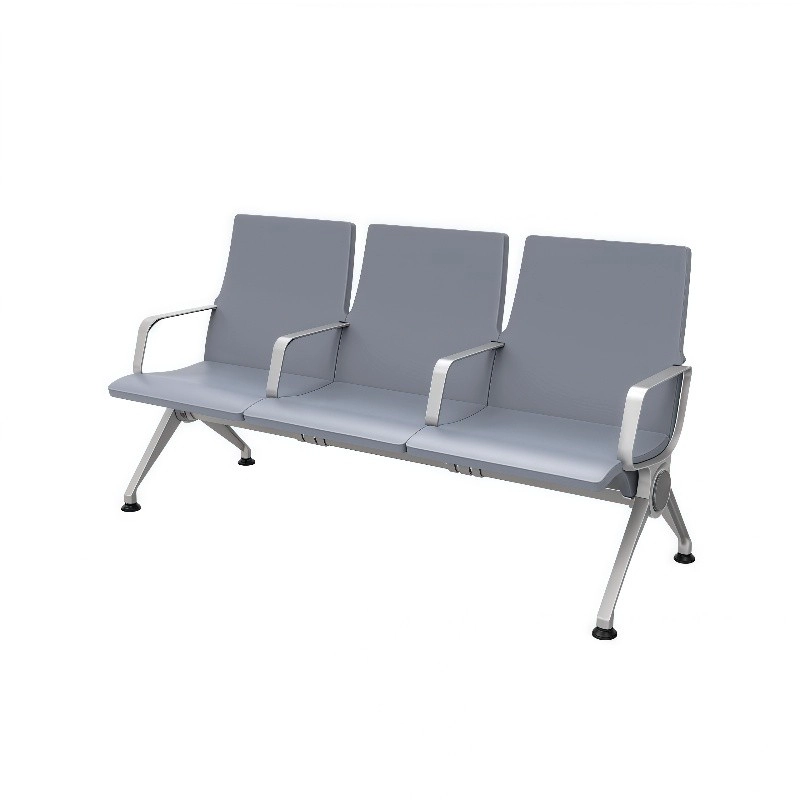
The pioneers of this transformation are appearing in fields closely related to health. Recently, the renowned ergonomic brand Black & White Tone released an innovative achievement called "AI Intelligent Lumbar Support Technology," which is considered a landmark event in the entry of waiting chairs (especially high-end waiting, office, and health chairs) into the intelligent era. The core of this technology lies in its subversion of the traditional passive mode of "people adapting to the chair," instead achieving active service where "the chair adapts to the person."
Specifically, this AI-equipped waiting chair deploys a high-sensitivity pressure sensor array and an AI chip inside the backrest. The moment you sit down, this system begins its work. It can capture subtle pressure changes in your lower back in real time, sensing your posture movements. Through complex AI algorithms, the system can respond to your needs in milliseconds, driving the lumbar support to automatically track and adjust in forward, backward, and up-and-down directions. Whether you're leaning forward to work or leaning back to rest, the intelligent lumbar support acts like a personal health manager, dynamically conforming to your lumbar spine and providing what is called "golden support."
This technology is backed by profound medical principles. This chair integrates the internationally recognized "McKenzie Method" and "Pascal's Law" into its mechanical structure. This means that the chair not only provides comfortable seating but also subtly helps correct posture, relieve lower back strain, and even offers preventative and rehabilitative benefits. For those who need to sit for extended periods while waiting or working, this smart waiting chair is like having a personal physical therapist.
Beyond breakthroughs in the health field, the Internet of Things (IoT) technology has also made public waiting chairs smarter and more efficient. In some smart city showcases and high-end commercial buildings, smart waiting chairs have begun to integrate multiple functions. For example, the armrests integrate wireless charging modules, completely solving the problem of "battery anxiety" for modern people; the built-in Bluetooth speaker system allows you to connect your phone and enjoy your own private music space, making tedious waiting more enjoyable.
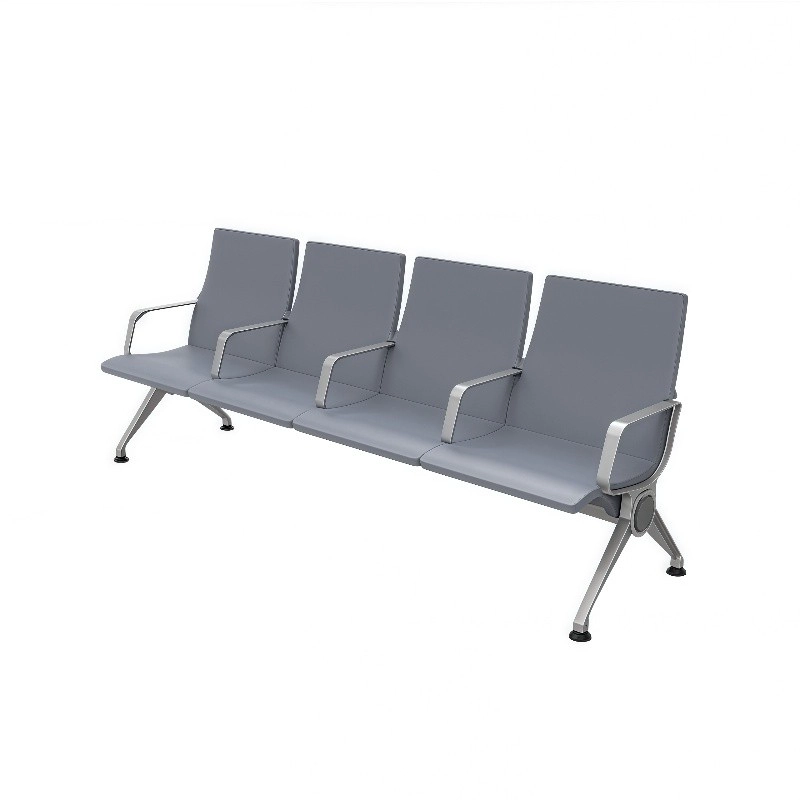
Furthermore, at the management level, smart waiting chairs can provide real-time usage data through sensors. For example, airport managers can use the backend system to view in real time which areas have high waiting chair utilization and which areas have vacant seats, allowing them to allocate resources and manage passenger flow accordingly. During the pandemic, some smart chairs were even developed with functions for temperature monitoring and crowd density warnings. These applications have upgraded waiting chairs from a simple physical facility to a key data node in the smart city and smart business management ecosystem.
Of course, the integration of technology also brings new considerations. How to maintain product reliability and durability while adding smart functions? How to protect users' private data from misuse? These are all issues that the industry needs to calmly consider and address as it rapidly advances.
However, the trend towards intelligence is irreversible. Future waiting chairs will not only be a combination of materials and design but also an integration of chips, algorithms, and sensors. It will evolve from a static "object" to a dynamic "health partner" and "information terminal." When the warmth of technology is truly integrated into every seating experience, we will realize that waiting can also be an enjoyable experience treated with technological care.