





From "Manufacturing" to "Quality Manufacturing": How Supply Chain Upgrades Forge the "Steel Skeleton" of Waiting Chairs?
Waiting chairs, especially those widely used in outdoor and high-traffic areas, must have a sufficiently robust "skeleton." **Steel**, as the main "frame" of the waiting chair, directly determines the product's lifespan. In recent years, affected by fluctuations in commodity prices, raw material costs have been a focus for businesses. However, smart companies haven't blindly pursued low prices, but instead, through centralized procurement and process optimization, have ensured the stability of raw material quality while controlling costs.
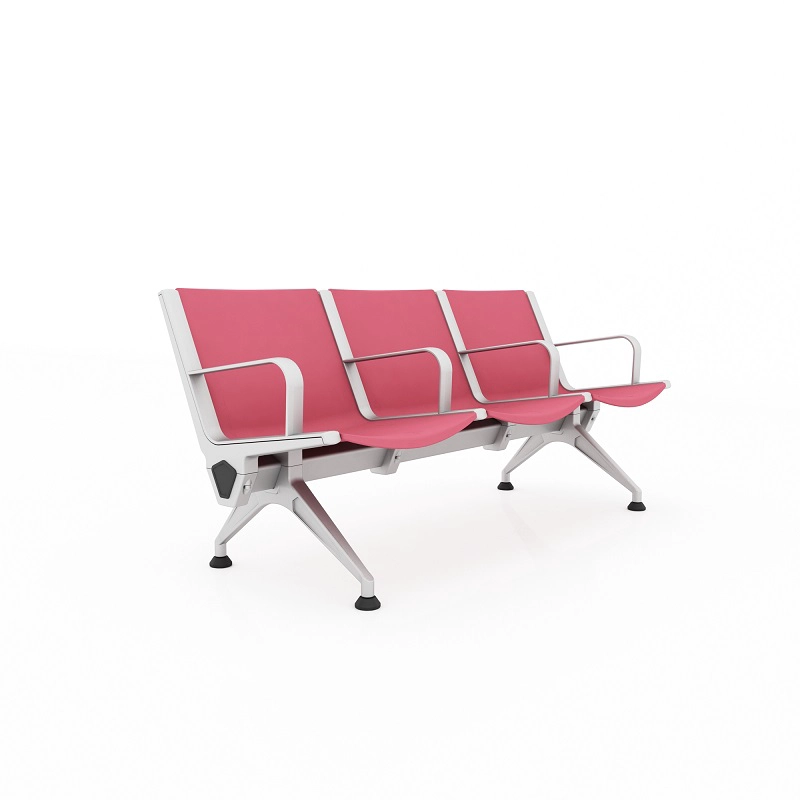
In the **surface treatment** process, a "green revolution" is underway. Traditional pickling and phosphating processes not only pollute the environment but also fail to guarantee long-term weather resistance. Today, leading companies in the industry have fully transitioned to environmentally friendly "electrostatic powder coating" or "electrophoretic coating" technologies. These processes are not only zero-emission but also form a dense, uniform protective film on the metal surface, giving the chairs stronger UV resistance and corrosion resistance. Even in humid southern regions or heavily polluted industrial areas, they remain like new for a long time, without rusting or peeling paint.
Besides metal processing, the supply chain for **non-metallic materials** is also constantly evolving. Fiberglass (FRP), as a lightweight, high-strength, and easily molded material, is increasingly used in waiting chairs with unconventional designs. By improving resin formulations and reinforcing fiber processes, modern fiberglass seats are not only stronger but also more environmentally friendly, with some products even achieving recyclability. In terms of filling materials, high-density, formaldehyde-free cold-cure foam has become standard, ensuring both comfortable resilience and protecting the health of users. The upgrading of the supply chain is also reflected in the deep application of **intelligent manufacturing**. In industrial clusters in Zhejiang and Guangdong, automated welding robots, CNC bending machines, and intelligent warehousing and logistics systems are no longer novelties. The introduction of these devices has greatly improved production accuracy and efficiency, eliminating errors caused by human operation. Whether the welds of a chair are smooth, the holes are precisely positioned, and the structure is sturdy—these details are strictly controlled under automated production lines.
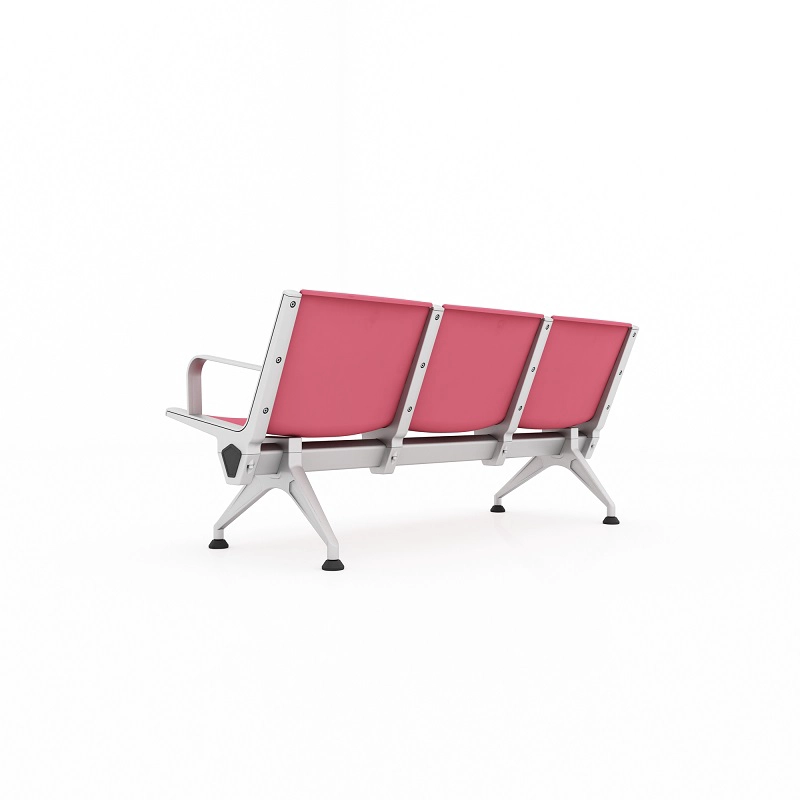
This transformation from "manufacturing" to "quality manufacturing" has had a profound impact on the industry. First, it significantly **increases the added value of products**. A waiting chair made with high-quality materials and exquisite craftsmanship may have a lifespan several times longer than ordinary products, saving buyers long-term maintenance and replacement costs. Secondly, it **enhances the company's ability to withstand risks**. In today's increasingly stringent environmental regulations, only companies with green and compliant supply chains can remain invincible in the market.
In short, the competition in the waiting chair industry is essentially a competition of supply chains. Companies that can control high-quality raw material resources, master core surface treatment technologies, and achieve intelligent manufacturing will build a strong competitive advantage. Their products, built with robust materials and advanced technology, can not only withstand the test of time but also support the Chinese waiting chair industry's rise to the global stage.