





Modular Magic: How Flexible Combinations Unlock Unlimited Spatial Possibilities
Traditional rows of chairs, while neat and uniform, often appear bulky and lack flexibility. Once installed, they are difficult to move or adjust. If the space layout changes, or if the number of seats needs to be increased or decreased, these "monolithic" structures become out of place, even leading to waste. This "one-size-fits-all" approach can no longer meet the increasingly diverse needs of modern commercial and public spaces.
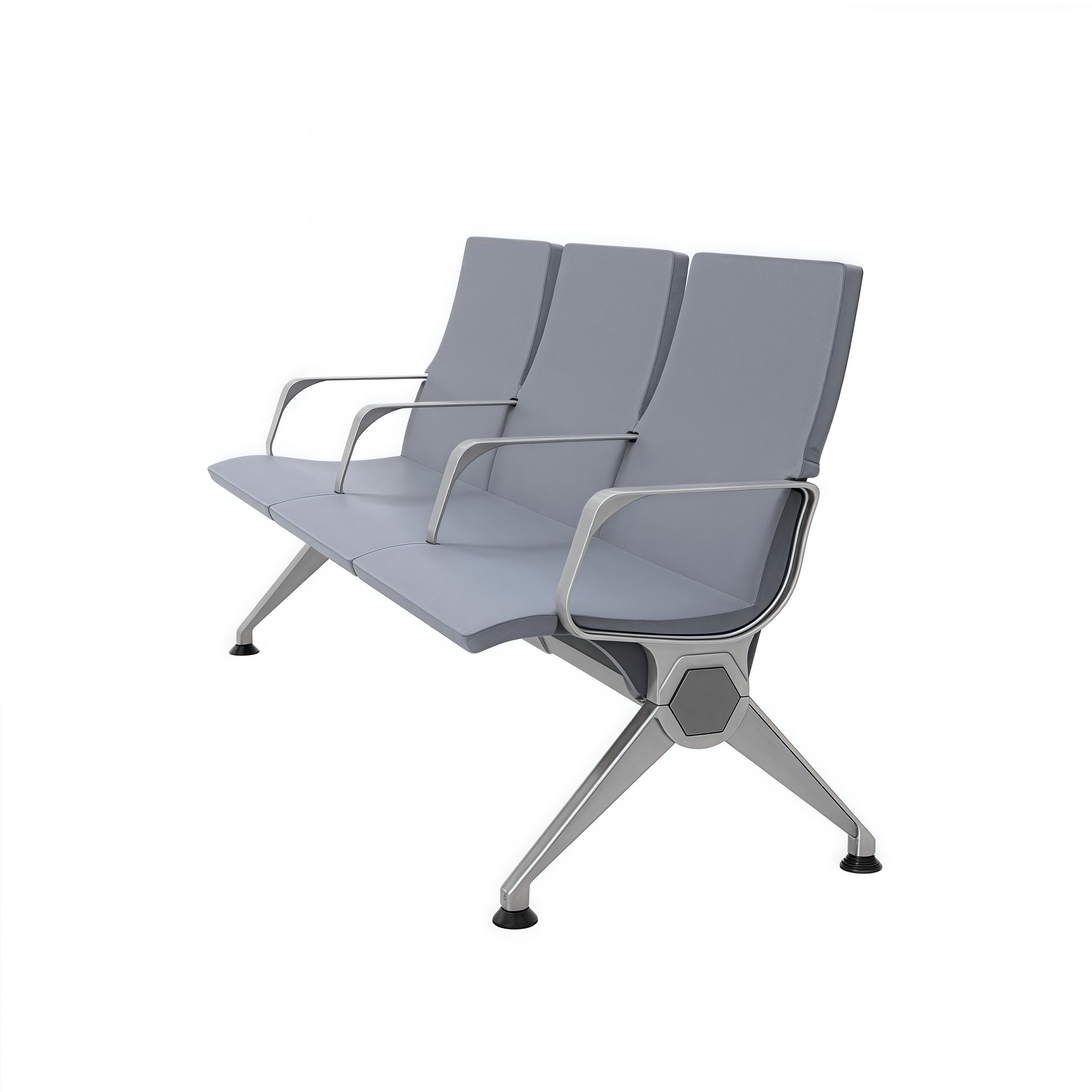
The emergence of modular design perfectly solves this problem. Its core concept lies in "breaking down into smaller parts and combining freely." Manufacturers no longer produce single finished products, but rather a series of standardized "functional units"—a single seat, a double seat, a unit with armrests, a unit with a coffee table, or even a curved corner unit. These units have a unified interface standard and can be easily connected together like building blocks.
The advantages of this design are comprehensive.
First, it gives space planners **unparalleled flexibility**. In airport waiting areas, the number of rows of seats can be flexibly increased or decreased according to flight schedules and passenger flow peaks; in shopping mall atriums, a circular resting island can be created, becoming a visual focal point; in hospital corridors, L-shaped modules can perfectly fit into corners, maximizing space utilization. Whether it's a straight corridor or an irregular corner, modular waiting chairs can handle it with ease.
Secondly, modular design greatly improves **transportation and installation efficiency**. Traditional large rows of chairs require specialized large vehicles for transportation, and installation requires professional personnel for complex fixing. Modular units are small and lightweight, and can easily pass through elevators and narrow passages. On-site installation only requires a few simple connectors, greatly shortening the construction period and reducing logistics and installation costs. This is undoubtedly a huge advantage for commercial projects that need to open quickly or adjust their layout.
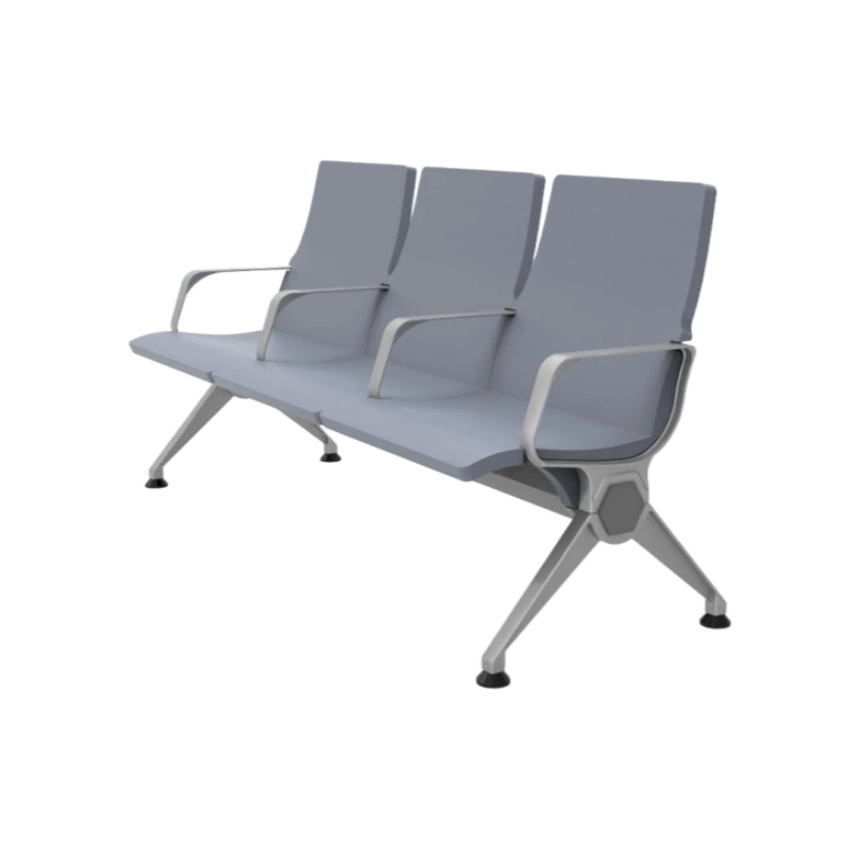
Furthermore, modular design brings **aesthetic diversity**. Different modules can be combined with different colors, materials, and textures. For example, a few brightly colored fiberglass modules can be interspersed among a row of dark mesh seats to create a lively visual rhythm; or in an office waiting area, wooden tabletop modules can be combined with upholstered seating modules to create a composite space that combines work and relaxation functions. This "personalized" customization makes waiting chairs an integral part of the space's decor, rather than merely an accessory.
From a production perspective, modular design also promotes standardization and intelligent manufacturing in the industry. Standardized component production is easier to automate and scale, thereby reducing costs and improving quality consistency. At the same time, this also encourages companies to shift from simply "selling products" to providing "space solutions."
In short, modular design is redefining the form and function of waiting chairs. It transforms waiting chairs from rigid fixtures into a vibrant and creative spatial language. In the future, we will see more diverse and functionally rich waiting chair combinations, filling every corner of our public spaces in the most flexible way.