






Saying Goodbye to the "One-Size-Fits-All" Approach: How Ergonomic Data is Reshaping the Public Seating Experience
For a long time, the design of public waiting chairs has often ignored the natural curvature and stress distribution of the human spine. Traditional flat or right-angled designs easily lead to problems such as lumbar spine suspension and back pain after prolonged sitting. This is not only a lack of comfort but also a potential threat to the user's health. The industry's pain point is clear: how to ensure the high durability of public seating while providing support and care for the human body?
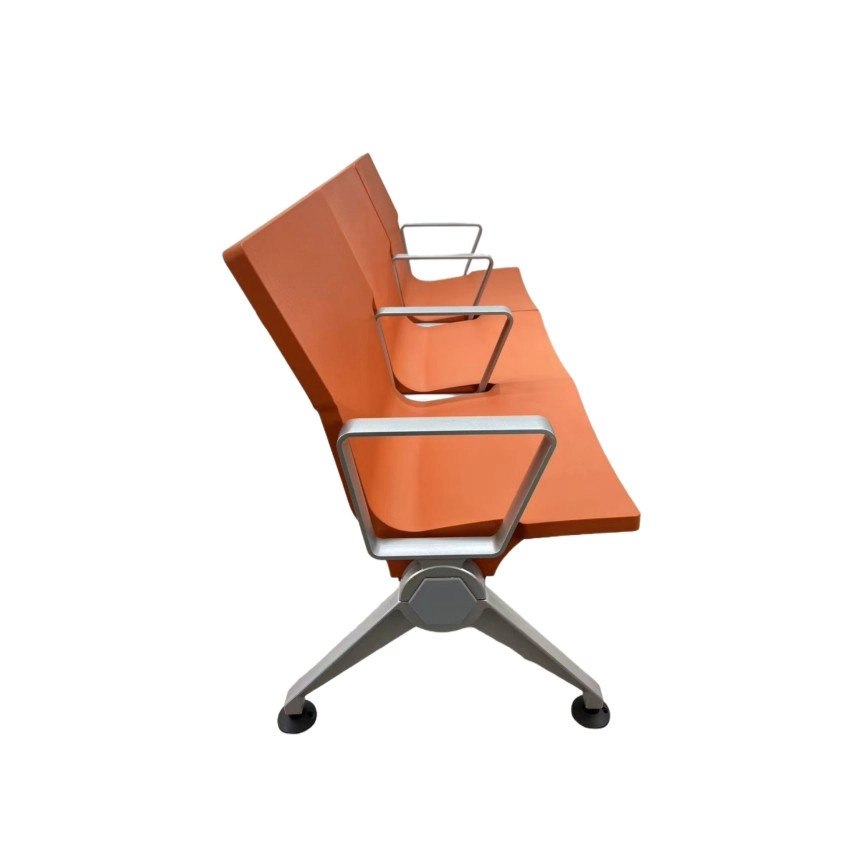
The solution to this problem lies in the in-depth exploration and application of ergonomic data. Modern waiting chair design no longer relies on the subjective judgment of designers but is built upon a vast database of human body data. By collecting and analyzing the body curves of people from different regions, age groups, and body types, designers can create more scientifically sound chair models.
This transformation is particularly evident in the **support structure**. The new generation of waiting chairs features backrests that are no longer simple flat surfaces but precisely calculated three-dimensional curves. This design aims to simulate the natural S-shaped curve of the spine, providing precise support points for the thoracic and lumbar vertebrae. Especially for the lumbar spine, the most vulnerable part for people who sit for long periods, many products are now adopting thickened, heightened, or built-in elastic lumbar support designs to ensure that when users lean back, their lower back has firm support, effectively distributing spinal pressure and reducing muscle strain.
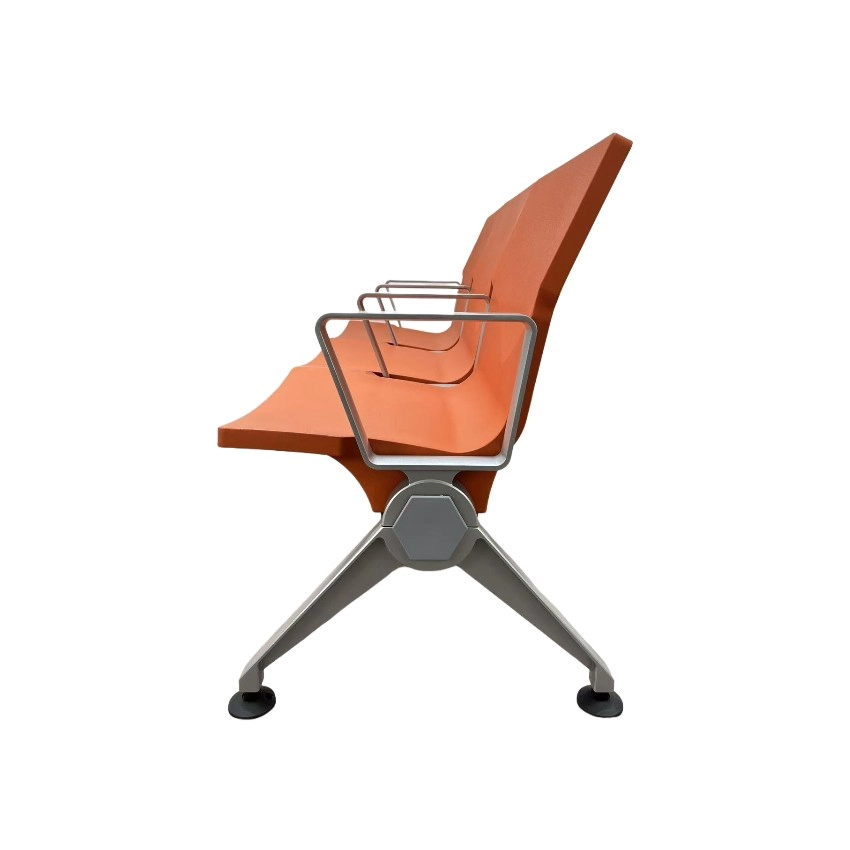
In addition, **seat design** has also evolved from "hard" to "soft," and then to "scientific support." Early waiting chairs used mostly hard materials for ease of cleaning and durability. While durable, they lacked comfort. Modern waiting chairs have found a perfect balance between the two. High-density cold-foamed sponges and highly elastic mesh fabrics are widely used in these chairs. These materials provide a cloud-like soft seating experience while also offering excellent resilience, evenly distributing pressure on the hips and preventing the awkwardness of sinking too deep or experiencing uncomfortable hardness. Simultaneously, the seat depth and width have been optimized to ensure comfortable seating for adults while preventing lower back strain caused by excessively deep seats.
This meticulous attention to detail is not only reflected in the product itself but also in the upgraded philosophy of public service. When an ergonomically designed waiting chair is placed in a hospital, airport, or shopping mall, it conveys the message to users: "We care about your physical comfort, even during the waiting process." This is not only physical support but also psychological care.
In short, the shift from "making do" to "paying attention to detail" is not just a change in the physical form of the waiting chair, but a return to respect and care for people. Future waiting chairs will no longer be a burden on the body, but rather guardians of health. They will use scientific curves to support our fatigue and expectations in public spaces.