





Post-Pandemic Hygiene: The Self-Sanitizing School Desk and Chair That Uses Light to Kill Viruses
The memory of mass school closures has permanently scarred the psyche of educational administrators. The next frontier of infection control isn't a chemical spray — it’s a school desk and chair surfaced with a photocatalytic coating that silently shreds viruses and bacteria using nothing but the classroom’s ambient LED lighting.
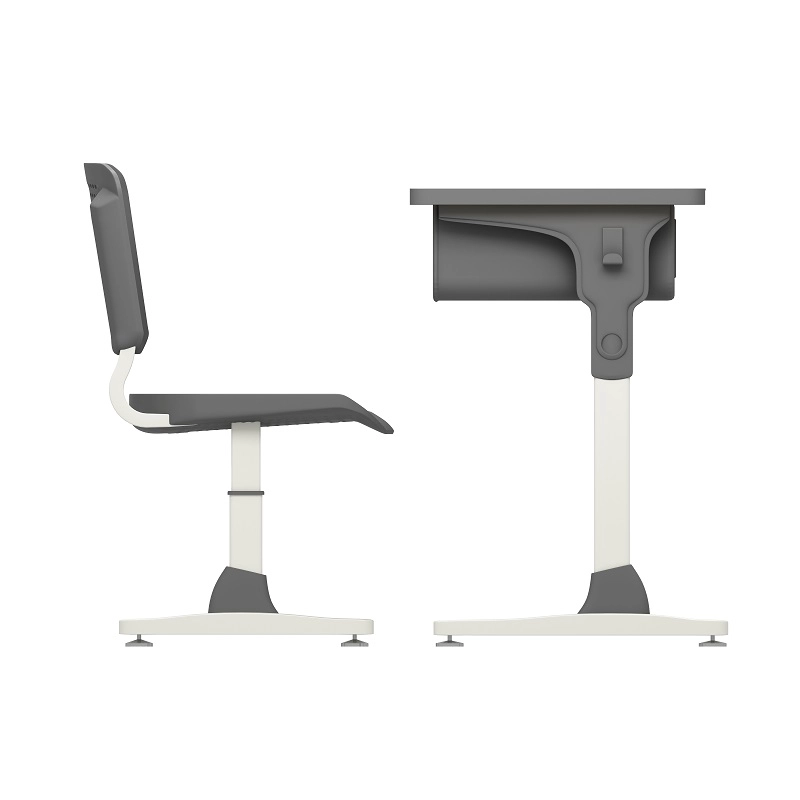
School custodians know the grim routine: wipe down every desk with disinfectant after every class, a logistical impossibility in most understaffed public schools. The result is that high-touch surfaces, particularly the writing surface of a shared school desk and chair, become fomites — reservoirs of influenza, norovirus, and the common cold that rip through a student body each winter. A material science breakthrough from a Japanese chemical firm, now being licensed to global furniture makers, embeds a nano-scale titanium dioxide layer into the high-pressure laminate surface. When photons from standard overhead fluorescent or LED lighting strike this coating, it triggers a photocatalytic reaction that produces reactive oxygen species. These microscopic free radicals attack the lipid membranes of bacteria and the protein coats of viruses, reducing the pathogen load by 99.9% within two hours of exposure, continuously, without human intervention.
This self-cleaning school desk and chair does not feel high-tech to the touch. The titanium dioxide layer is optically transparent and completely non-toxic; it does not leach chemicals, and it is safe for skin contact. It is integrated during the resin impregnation stage of the laminate, meaning it won’t rub off with aggressive cleaning or fade over the desk’s life. The coating also has a secondary benefit: it breaks down volatile organic compounds and odors, keeping the classroom smelling fresher. The cost adder is modest — approximately 15% on the desk surface — which is offset by a documented reduction in absenteeism among both students and teachers in pilot installations. For a school board calculating the cost of substitute teachers and lost state funding tied to attendance rates, investing in a hygienic school desk and chair becomes a compelling financial equation, not just a health one.
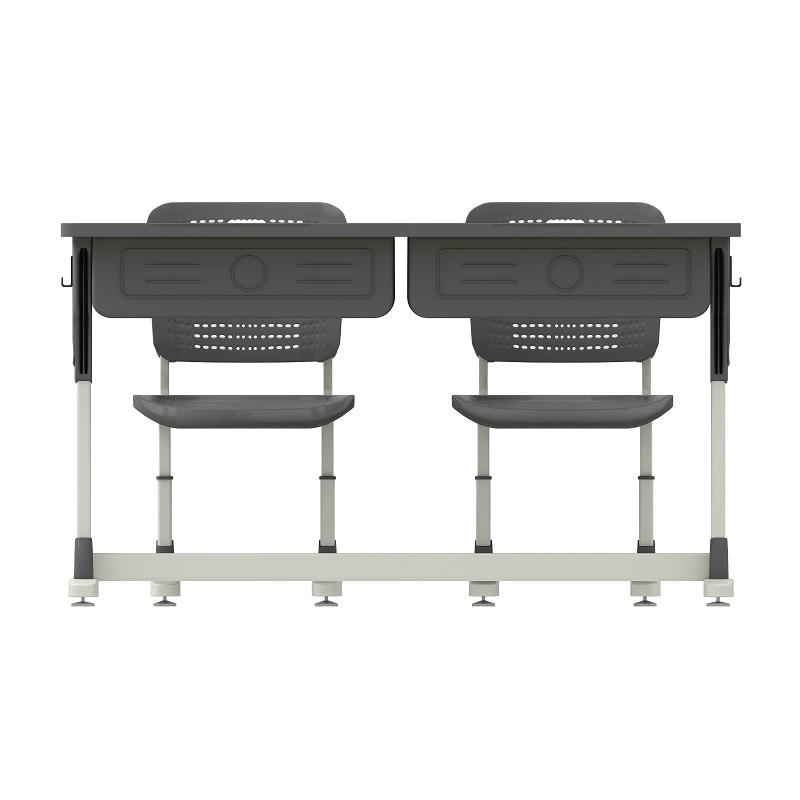
The psychological dimension is equally powerful. Providing students and parents with a visibly proactive, technology-driven hygiene solution restores confidence in the physical safety of the school environment. Manufacturers are branding these surfaces with a subtle "Active Clean" watermark on the corner of the desk, a constant visual reassurance. The school desk and chair has always been a shared public resource; now it is also a shared public health intervention. As climate change and global mobility increase the frequency of novel pathogen outbreaks, the spec for any new school desk and chair will almost certainly mandate integrated antimicrobial properties. The days of the inert, passive desk surface are numbered; the active, self-defending desk is the new baseline for educational infrastructure worldwide.