





The Future Has Arrived: Smart Integration and the Internet of Things – The "Smart Brain" of Waiting Chairs
Looking back, the evolution of waiting chair functionality has mainly focused on the physical level: from hard to soft, from simple to ergonomic. The future evolution, however, will take place at the digital level. **Smart integration** is becoming the most significant growth point in the high-end waiting chair market, with its penetration rate increasing at an astonishing 79% annually.
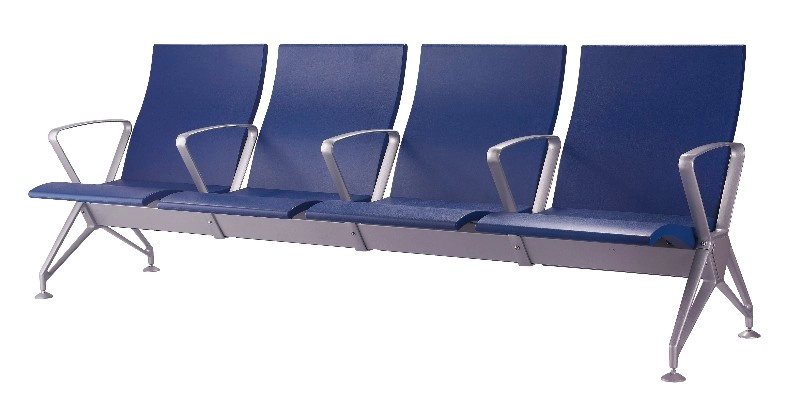
This "smart brain" primarily serves the **convenience and health of users**.
- **Energy Supply:** This is the most basic but also the most essential need. Today's smart waiting chairs already include USB-A/C charging ports as standard and are beginning to popularize wireless charging panels. Whether you need to charge your phone for navigation or connect headphones to listen to music, the chair can provide a continuous supply of energy, eliminating your "battery anxiety."
- **Health Monitoring:** Going further, some cutting-edge products are beginning to integrate biosensing technology. When you sit down, the chair can non-invasively monitor your heart rate, respiratory rate, and even fatigue level. For medical waiting chairs, this data can be transmitted to doctors in real time, serving as a reference for diagnosis and treatment; for office or transportation waiting chairs, it can recommend soothing music or adjust massage intensity based on your physical condition, providing proactive health care.
- **Interactive Entertainment:** Smart displays on the back of the chair or interaction via mobile phone AR can provide flight/queue information, nearby navigation, and even entertainment content, making the tedious waiting time more engaging.
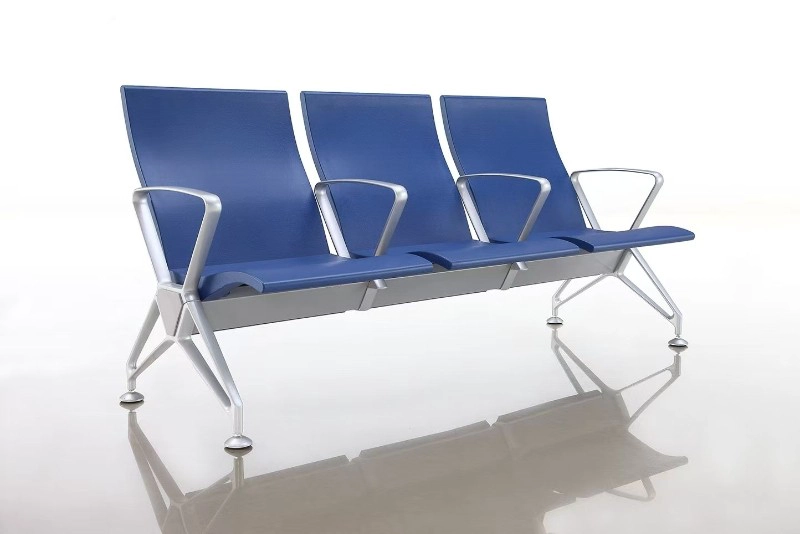
At the same time, this "smart brain" also brings unprecedented efficiency improvements for **managers**. In the construction of smart cities and smart businesses, waiting chairs are no longer isolated facilities, but rather a "nerve ending" in the entire IoT ecosystem. - **Data Insights:** Through built-in sensors, the chairs can collect real-time data on usage rates, foot traffic, and hot spots. For example, in an airport, managers can use the backend system to quickly see which areas have high seat occupancy and which have available seats, allowing them to allocate cleaning or security resources and optimize space layout accordingly.
- **Environmental Sensing:** Integrated environmental sensors can monitor surrounding temperature, humidity, air quality, and even noise levels. This data is crucial for improving the microenvironment of public spaces.
- **Asset Management:** The system can monitor the status of the chairs in real time, such as battery level (for chairs with added functions) and equipment damage, enabling predictive maintenance and significantly reducing operating and maintenance costs.
Of course, the integration of smart technology also brings new challenges, such as data privacy protection, water and damage resistance of the equipment, and long-term operational stability. However, these challenges cannot stop the overarching trend of technological integration.
In short, the waiting chairs of the future will be intelligent terminals integrating multiple sensors, communication modules, and application services. They will be both a "health partner" and "energy station" for users, and a "data eye" and "helpful assistant" for city managers. When chairs become intelligent, waiting time will become more efficient, comfortable, and enjoyable.