





The Circular Material Passport: Blockchain-Tracked Steel and Plastic in the Modern School Desk and Chair
Imagine pointing your phone at a chair and instantly seeing where its steel was mined, which factory forged it, and how many times its plastic has been recycled. Blockchain technology is now being applied to the school desk and chair supply chain, creating an unbreakable digital record of every material's journey from mine or oil well to classroom.
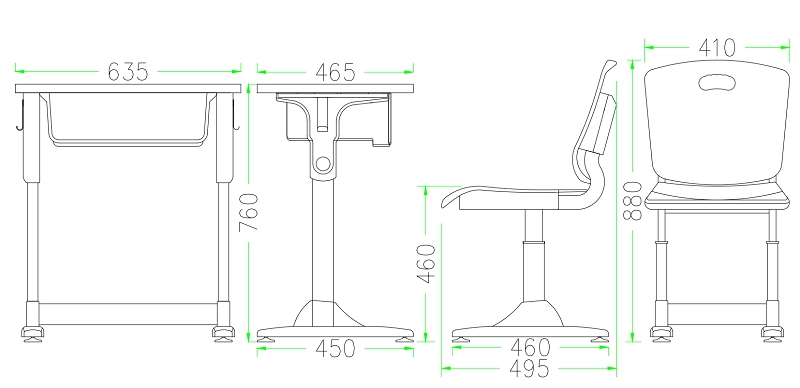
The circular economy requires knowledge: a recycler needs to know exactly what is in a product to process it safely and effectively. A new consortium of furniture makers, material suppliers, and a blockchain platform has created the "Material Passport" for the educational furniture industry. Every component of a certified school desk and chair — the steel frame, the polypropylene shell, the laminate surface, the fasteners — is tagged at its point of origin with a digital token. This token, stored on a permissioned blockchain, records the supplier, the material composition, the percentage of recycled content, and any chemical additives. When the components are assembled into a finished school desk and chair, a new composite token is minted, linked to its children. The end result is a QR code on the final product that reveals a complete, immutable provenance. A school district or a recycler in 2050 can scan a chair destined for the scrap heap and know precisely which materials can be recovered and how.
This level of radical transparency has immediate practical applications. A school committed to ethical procurement can verify that the steel in their school desk and chair was not sourced from a conflict zone or a factory with forced labor. A facilities manager can instantly access the specifications for the exact replacement casters or gas struts needed, without digging through paper archives from a decade-old purchase order. Most critically, the blockchain passport enables dynamic carbon accounting. The carbon footprint of the chair is not a static number from a one-time lifecycle assessment; it is continuously updated as the energy grid of the supplier factory changes, or as the chair is refurbished and re-leased. This allows a school district to track its Scope 3 emissions in near real-time, a holy grail for sustainability reporting.
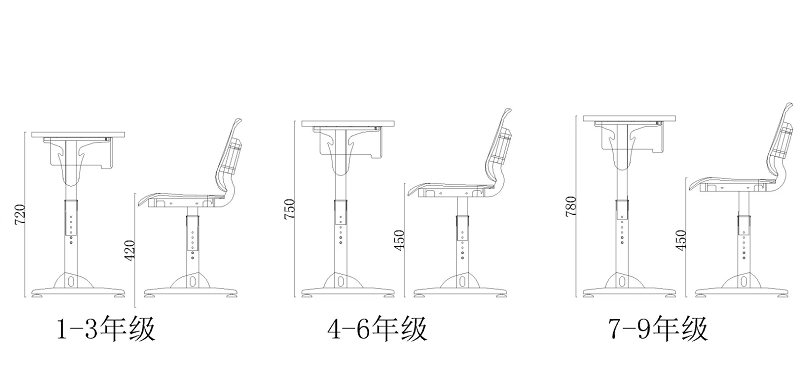
The system adds a modest cost per unit but provides a competitive advantage for manufacturers seeking to differentiate on transparency and circularity. Early adopters are elite international schools and universities with strong ESG mandates. The blockchain school desk and chair is a testbed for the entire contract furniture industry. It proves that a complex, multi-material product can have a clear, trustworthy, and useful digital identity that persists across its entire lifecycle. The physical chair in the classroom is now twinned with a digital chair in the cloud, an avatar that carries the chair's history and its future potential. In the coming era of resource scarcity and regulatory pressure, a school desk and chair without a digital passport may simply become uninsurable, unsellable, and unlandfillable — an orphan object with no way home.