





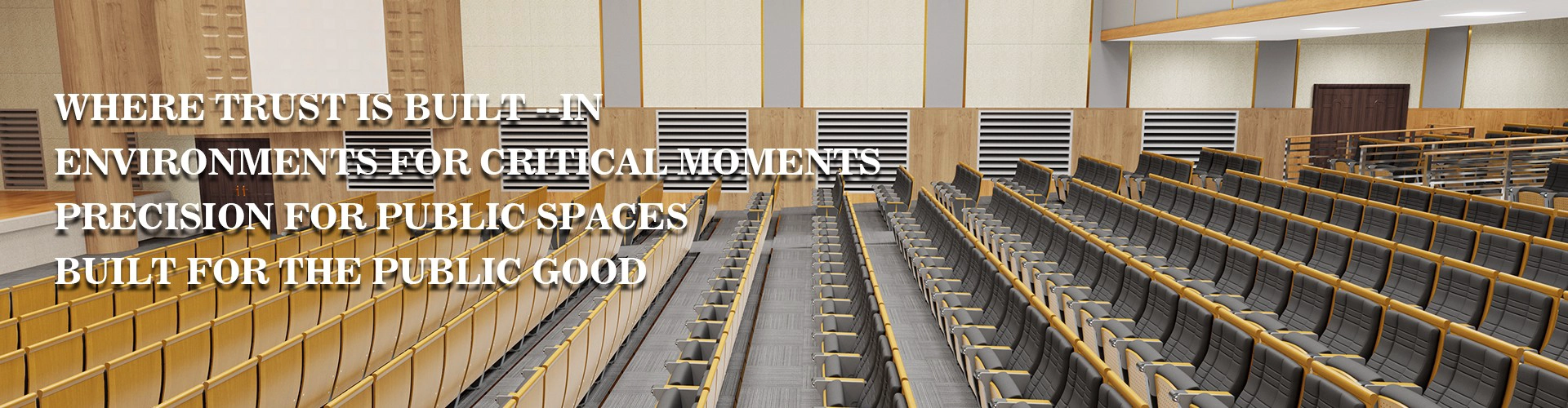
The Future of the School Desk and Chair: A Speculative Look at the 2040 Classroom
As we stand in the mid-2020s, the humble school desk and chair is at an inflection point, absorbing technologies from telemedicine, AI, and advanced materials. What will the classroom seat of 2040 look like? A cross-disciplinary design futures team has released a detailed, research-backed concept that is both thrilling and unsettling.
The "Aula 2040" project, a collaboration between industrial designers, futurists, and education professors at TU Delft, is a speculative design probe, not a product. But it is grounded in emerging technologies that are already in the lab. The concept school desk and chair is a single, organic, pod-like form made from a self-healing, bio-composite mycelium foam that can sense minor damage and literally regrow to repair scratches. The chair has no mechanical adjustments; instead, its surface is a soft, shape-memory polymer that morphs to the precise contours of the student's body when they sit, distributing pressure perfectly, and then returns to a neutral shape when they leave. The desk surface is an entirely seamless, flexible e-ink and haptic-feedback display that can switch from a blank writing surface to a touch-sensitive interactive textbook to a glasses-free 3D holographic projection zone. The school desk and chair has physically merged with the screen.
The more radical projections concern biometrics and AI. The chair constantly and passively monitors vital signs — heart rate variability, respiration rate, core temperature — through optical sensors woven into the fabric of the backrest. This data is fed to an on-device AI that functions as a private learning coach, detecting signs of cognitive overload, frustration, or fatigue and subtly adjusting the task difficulty, suggesting a break, or altering the lighting and temperature of the personal pod. The school desk and chair becomes an empathetic, adaptive learning environment, a kind of cocoon that anticipates the learner's cognitive and emotional state. The speculative design intentionally raises ethical red flags: who owns this deeply personal biological data? Does this level of monitoring infantilize the student? Does it create a hyper-individualized bubble that erodes the collective, social nature of learning?
The concept places the student in a physically isolated pod, optimized for focused digital work, but the designers acknowledge that the counter-trend may be stronger: a pushback toward communal, analog, messy, human-centered learning. The most futuristic school desk and chair might, by 2040, be designed to deliberately limit screen time, to facilitate eye contact and physical collaboration, to be moved and banged together, to be made of wood and smell like a forest. The Aula 2040 project is valuable precisely because it provokes these debates. It forces us to ask what we actually want from a school desk and chair. Is it a device for efficient information transfer, or a place of human formation? The answer will shape the classroom for decades. The one certainty is that the school desk and chair will never again be a silent, passive object; it will be a site of negotiation between technology and humanity, between comfort and control, between the individual and the group.