





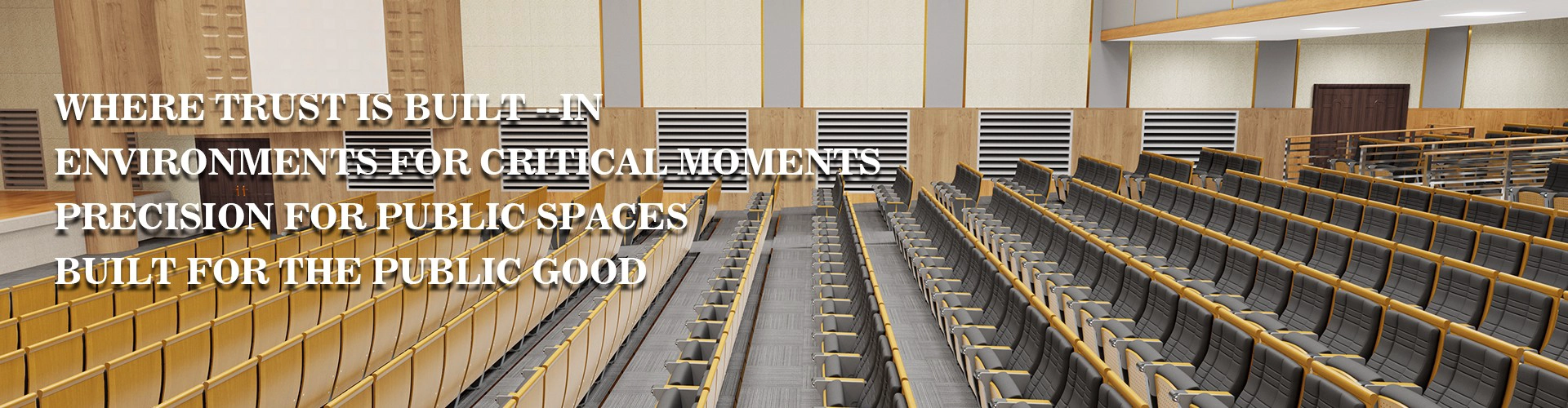
3D Printing Unleashes Custom Auditorium Seats for Irregular Spaces
Historic venues with curved balconies and oddly angled rows have always posed a nightmare for seating planners. Enter additive manufacturing, which is now enabling fully bespoke auditorium seats that fit like a glove — without a six-figure tooling bill.
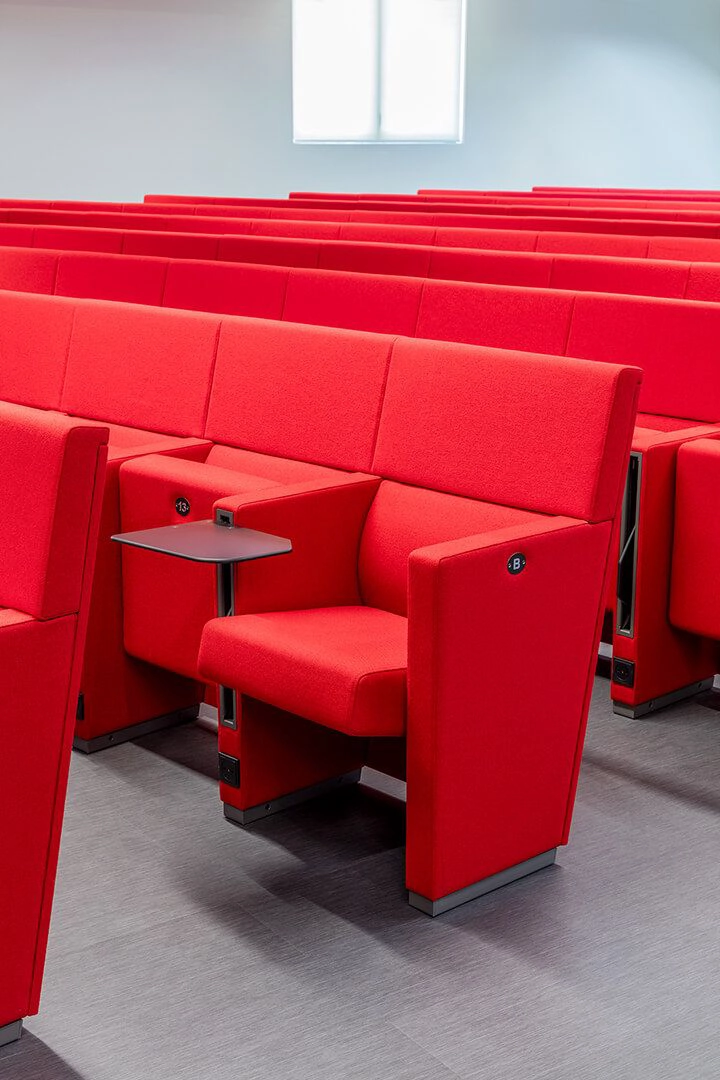
The constraints of traditional injection molding and wood forming meant that architects often had to regularize a space to fit the chair, not the other way around. That forced compromise — filling a sinuous art nouveau balcony with rigid rows of rectangular chairs — has long frustrated purists. Today, large-format 3D printing is liberating seating design from the tyranny of the straight line. Using robotic arm extruders and recycled polymer granules, fabricators can now “draw” seat shells in any compound curve imaginable, directly from a digital scan of the existing floor. For the restoration of a 1920s atmospheric theater in Los Angeles, a seating contractor 3D-printed 340 auditorium seats with a continuously variable backrest angle that follows the radial sweep of the balcony, ensuring every patron faces the stage perfectly perpendicularly. The print material, a glass-fiber-reinforced polycarbonate blend, offers the same structural strength as cast aluminum at a fraction of the weight.
The economics of additive manufacturing have tipped decisively in favor of small and complex batches. Traditional molds for a curved seat shell can cost upwards of $80,000 and lock in a design for years. 3D printing enables what manufacturers call “mass customization” — each set of auditorium seats in the run can be slightly different, accommodating the eccentricities of a hand-plastered wall or an uneven historic floor without any change in the digital file’s incremental parameters. Post-processing includes a robotically applied spray-coating of fire-retardant polyurea, creating a smooth, cleanable surface that meets all fire codes. The surface can then be digitally printed with a wood-grain or metallic finish, making it indistinguishable from more traditional materials to the casual observer.
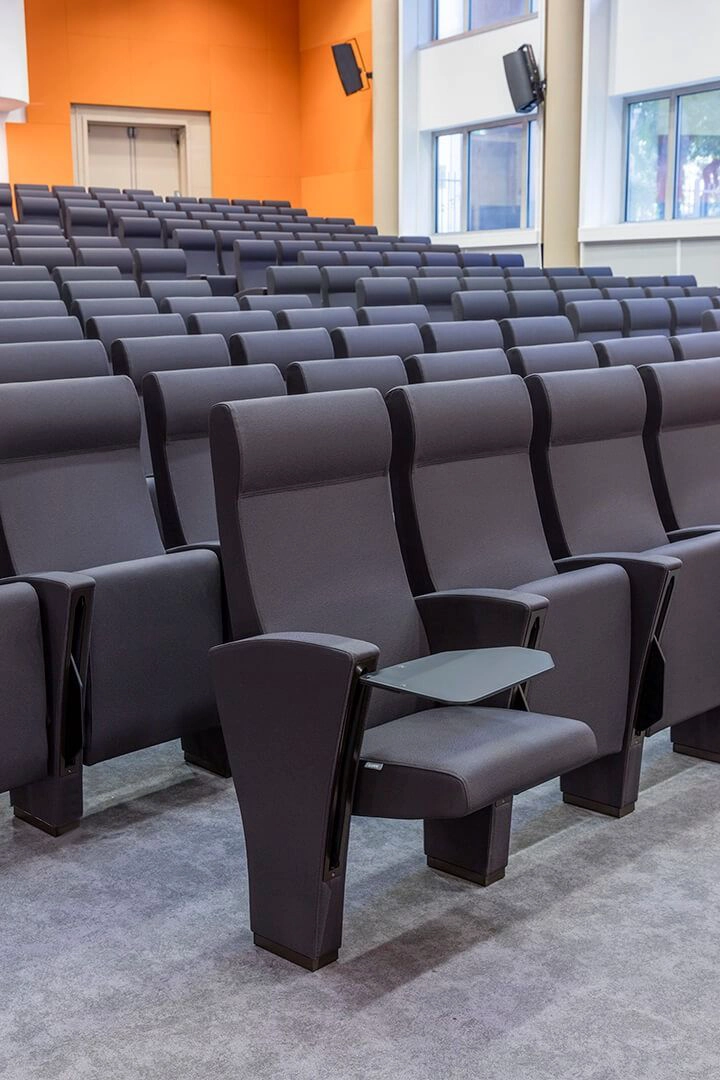
Sustainability gains are equally compelling. Because the printer deposits material only where needed, waste is reduced by up to 85% compared to subtractive CNC milling. Some projects are using filament produced entirely from end-of-life auditorium seats that have been ground, pelletized, and re-extruded into new print stock, creating a genuinely circular material loop. As the technology matures, specifiers envision printing entire backrest-upholstery composites in a single pass, embedding textile textures directly into the polymer skin. For theaters housed in unorthodox structures — converted churches, caves, or elliptical planetariums — 3D-printed auditorium seats are rapidly becoming the go-to solution for marrying maximal comfort with uncompromising spatial honesty.