





Custom-Fit Classroom: 3D Body Scanning Stations Produce a Perfectly Fitted School Desk and Chair for Each Student
The mismatch between a growing child’s body and a one-size-fits-all desk is a chronic cause of back pain and poor handwriting. A Dutch university lab has prototyped a school desk and chair system that is parametrically customized for each child based on a ten-second 3D body scan taken at the beginning of the school year.
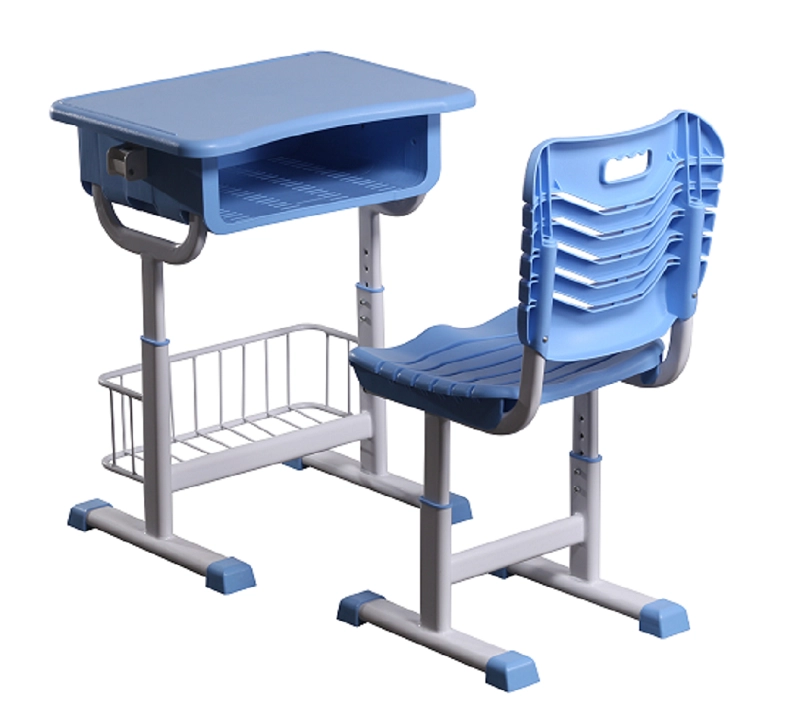
The ergonomic standard for school furniture, EN 1729 in Europe, is built around size marks based on average stature ranges. But averages hide vast individual variation: two children of the same height can have completely different leg-to-torso ratios, requiring a different seat depth or desk slope. The "BodySmart" project uses a simple tablet-based photogrammetry app that a school nurse uses to capture a 3D mesh of each student. The algorithm then calculates the optimal seat height, seat pan depth, backrest lumbar apex, and desk height for that unique physiology. The data file is sent to a regional micro-factory equipped with large-format 3D printers and CNC pipe-benders. Within a week, a custom school desk and chair kit is delivered to the school, with the frame cut and bent to the child’s specific measurements, and the seat shell 3D-printed from recycled PETG in a bespoke contour. It is mass customization at the scale of a classroom.
The immediate impact is on posture and comfort. In a trial in Rotterdam, students using the custom school desk and chair reported significantly less back and neck discomfort, and their teachers noted improved handwriting neatness, likely due to a more stable and supported seated position. The chairs are designed to be adjustable for growth over the course of a school year using simple shims and extendable leg inserts, but the core geometry is bespoke. The cost, currently high due to the bespoke manufacturing pipeline, is being driven down by advances in automated robotic 3D printing farms. The vision is that the school desk and chair becomes a personalized learning tool, just like a tablet or a textbook. The student's name is embossed on the shell, fostering a sense of ownership and care that reduces vandalism and loss.
The implications for inclusion are profound. Students with mild physical disabilities, such as leg length discrepancies or scoliosis, are often poorly served by standard furniture, requiring expensive and stigmatizing specialist equipment. The BodySmart system can accommodate these asymmetries natively in the digital model, producing a school desk and chair that supports the body that student actually has, not the body a designer in a factory imagined. This normalizes adaptation, making the inclusive option the default option. The project is a window into a future where the factory is not a distant, smoke-belching facility, but a quiet, local printing hub that produces exactly what a community needs, when it needs it, to the exact measure of its children. The standardized classroom chair, a symbol of industrial-age uniformity, may soon be an anachronism.