





From "Manufacturing" to "Intelligent Manufacturing": How Digitalization is Reshaping the Waiting Chair Industry
In the past, waiting chair production relied heavily on manual welding, polishing, and assembly. This was not only inefficient, but also resulted in product quality that varied significantly depending on the skill level of the workers, making it difficult to guarantee high consistency. With increasing market competition and rising customer demands for quality, this extensive production model is no longer sustainable. The introduction of digital and intelligent technologies has become the key to breaking this impasse.
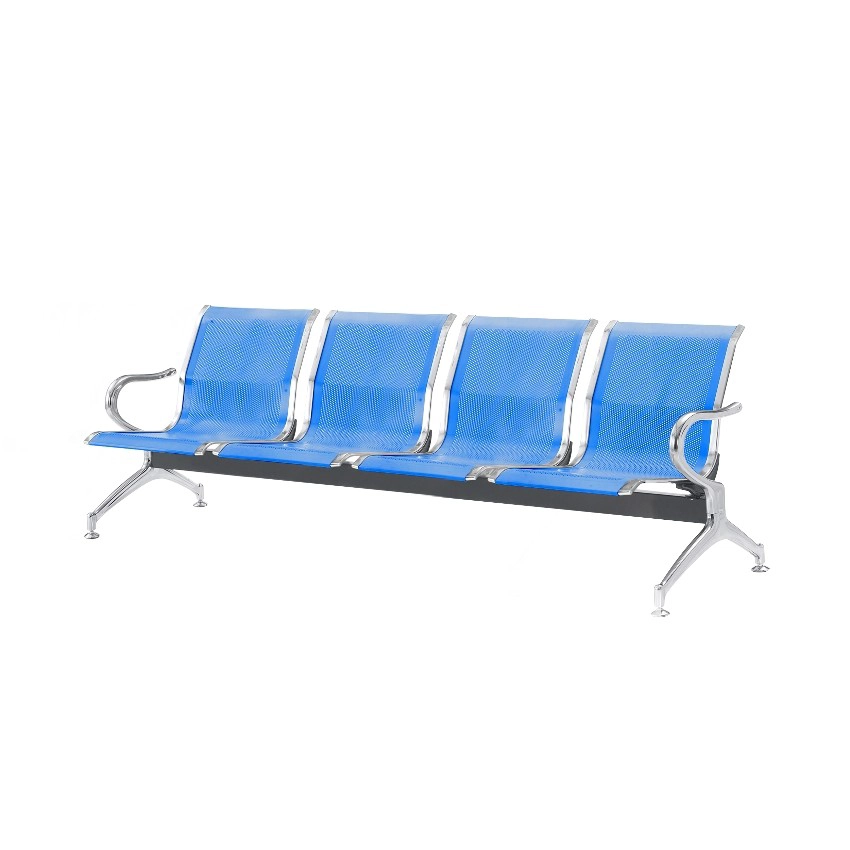
**Intelligent manufacturing** is first and foremost evident in the production process. By introducing ERP (Enterprise Resource Planning) and MES (Manufacturing Execution System) systems, companies have achieved digital control of the entire process, from order management and raw material procurement to production scheduling. In the workshop, laser cutting machines can cut metal sheets into parts with millimeter-level precision; robotic welding arms can complete complex welding tasks with consistently high standards, ensuring that every weld is perfect; and automated spraying lines guarantee that the surface treatment of every chair is uniform and environmentally friendly.
This "intelligent manufacturing" capability brings multiple advantages to the industry. First is a **leap in quality**. Digital production eliminates human error, ensuring that the size, structure, and appearance of every product are highly consistent, meeting the stringent requirements for product consistency in large-scale engineering projects.
Secondly, there is **optimization of efficiency and cost**. Automated production lines can operate 24 hours a day, significantly shortening delivery cycles. At the same time, through refined material management, the utilization rate of raw materials is greatly improved, and the scrap rate is significantly reduced, thus effectively controlling production costs.
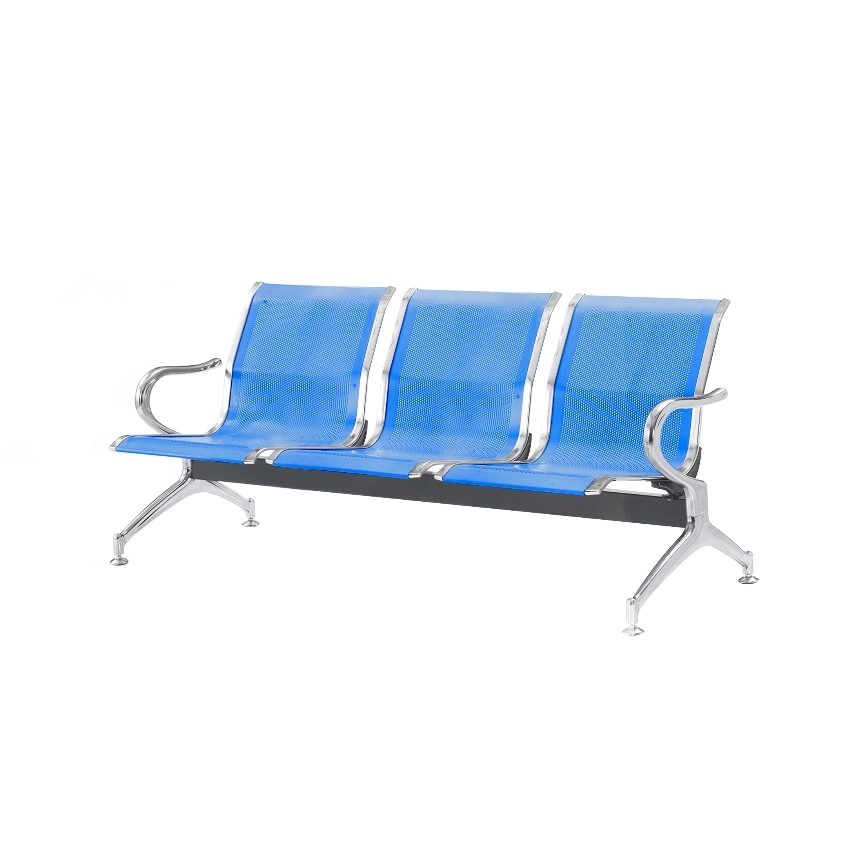
Finally, digitalization also enables **personalized customization**. In the traditional model, mass production and personalized customization were contradictory. However, through flexible manufacturing systems, production lines can quickly switch molds and programs, enabling mixed-line production of different styles and colors of products. This enables companies to meet customers' personalized needs for color, material, and even design at costs close to those of mass production, truly achieving "mass customization."
In short, digital transformation is no longer an "optional" choice for companies in the waiting chair industry, but a "mandatory" requirement for survival and development. Those companies that are the first to complete the "intelligent manufacturing" upgrade will have stronger market competitiveness and broader development prospects. The waiting chair factory of the future will be a highly intelligent, digitized "lights-out factory," where the precision of technology will be translated into the warmth of the product.